
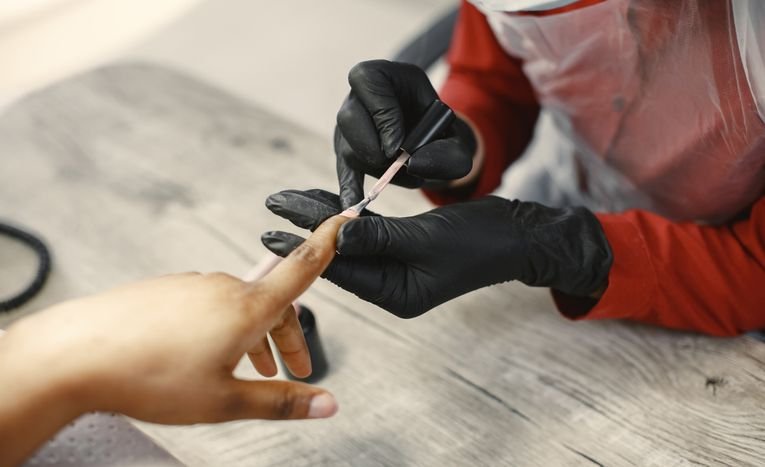
Nail art has moved well beyond simple polka dots and French tips, with techniques like chrome, cat eye and magnetic effects now dominating salon menus and social media feeds. Many of these looks appear far more complicated than they actually are once you understand the underlying technique. This guide breaks down how the most popular current nail art methods actually work, so you know what to ask for at a salon or where to start if you are trying them at home.
Chrome nails: the mirror finish
Chrome nails create a high-shine, mirror-like finish by applying a fine metallic powder over a cured gel polish base, then buffing it into the surface with a soft applicator. The powder itself contains tiny reflective particles, and it is the buffing motion, rather than the powder alone, that creates the genuinely mirrored effect. A no-wipe top coat is essential for this technique, since a standard top coat leaves a sticky layer that the chrome powder cannot properly adhere to.
Cat eye nails: the magnetic effect
Cat eye nail polish contains tiny metallic particles suspended in a gel base, invisible on their own until a magnet is held near the wet, uncured polish. Holding a magnetic wand two to three millimetres above the nail for around 20 to 30 seconds pulls these particles into position, creating a shifting light stripe that moves depending on the viewing angle. Different magnet shapes and positions create different effects, a straight edge producing a classic single stripe, while a curved or diagonal hold creates more complex patterns.
Comparing the main techniques
| Technique | How it works | Key tool needed | Difficulty for beginners |
|---|---|---|---|
| Chrome | Metallic powder buffed onto a no-wipe top coat | Chrome powder and applicator sponge | Moderate, technique-dependent |
| Cat eye | Magnet pulls particles in gel polish into a pattern before curing | Magnetic wand | Easy once magnet timing is understood |
| Cat eye chrome | Chrome powder layered over a cured cat eye base | Magnetic wand plus chrome powder | Advanced, combines both techniques |
| Nail foils | Thin metallic foil transferred onto a tacky adhesive layer | Foil adhesive and foil sheets | Easy, forgiving for beginners |
| Stickers and decals | Pre-made designs applied directly onto polish or gel | None beyond the stickers themselves | Very easy, ideal starting point |
Cat eye chrome: combining both techniques
Cat eye chrome layers a fine chrome pigment on top of a fully cured magnetic cat eye base, creating a look that combines the magnetic stripe with a mirrored, holographic quality. The process is more involved than either technique alone: the cat eye layer must be fully cured and any sticky residue removed before the chrome powder is applied, since chrome only adheres cleanly to a properly prepared, non-tacky surface. This is generally considered a more advanced technique and often benefits from a salon appointment rather than a first attempt at home.
What beginners should try first
Nail stickers and foils are the most forgiving starting points for anyone new to nail art, since they require no specialist tools beyond the product itself and are easy to correct if placement goes slightly wrong. Cat eye polish is a reasonable next step, since the magnetic effect largely does the work once you have the timing and magnet angle right. Chrome and combination techniques like cat eye chrome are best attempted once you are comfortable with basic gel application and curing, since a poorly prepared base is the most common reason these techniques do not turn out as expected.
Frequently asked questions
Can chrome powder be used over regular nail polish, or does it need gel?
Chrome powder generally needs a cured gel base with a no-wipe top coat to adhere properly, since the technique relies on a specific tacky surface that standard air-dried nail polish does not create in the same way.
Why isn’t my cat eye stripe showing up clearly?
This is usually down to timing or magnet distance. Holding the magnet too far from the wet polish, or not holding it steady for long enough, tends to produce a faint or uneven line rather than a crisp stripe.
Do these nail art techniques work on natural nails or only on enhancements?
Both chrome and cat eye techniques work on natural nails with gel polish, as well as on BIAB, acrylic or gel-X extensions, since what matters is the gel base and curing process rather than what lies underneath it.
Our recommendation
If you are new to nail art, start with stickers or foils to build confidence with placement and finishing, then move on to cat eye polish once you are comfortable with basic gel application. Save chrome and combination techniques like cat eye chrome for once you have a reliable, well-cured base under your belt, or book a salon appointment for these more advanced looks until you feel ready to try them yourself.