
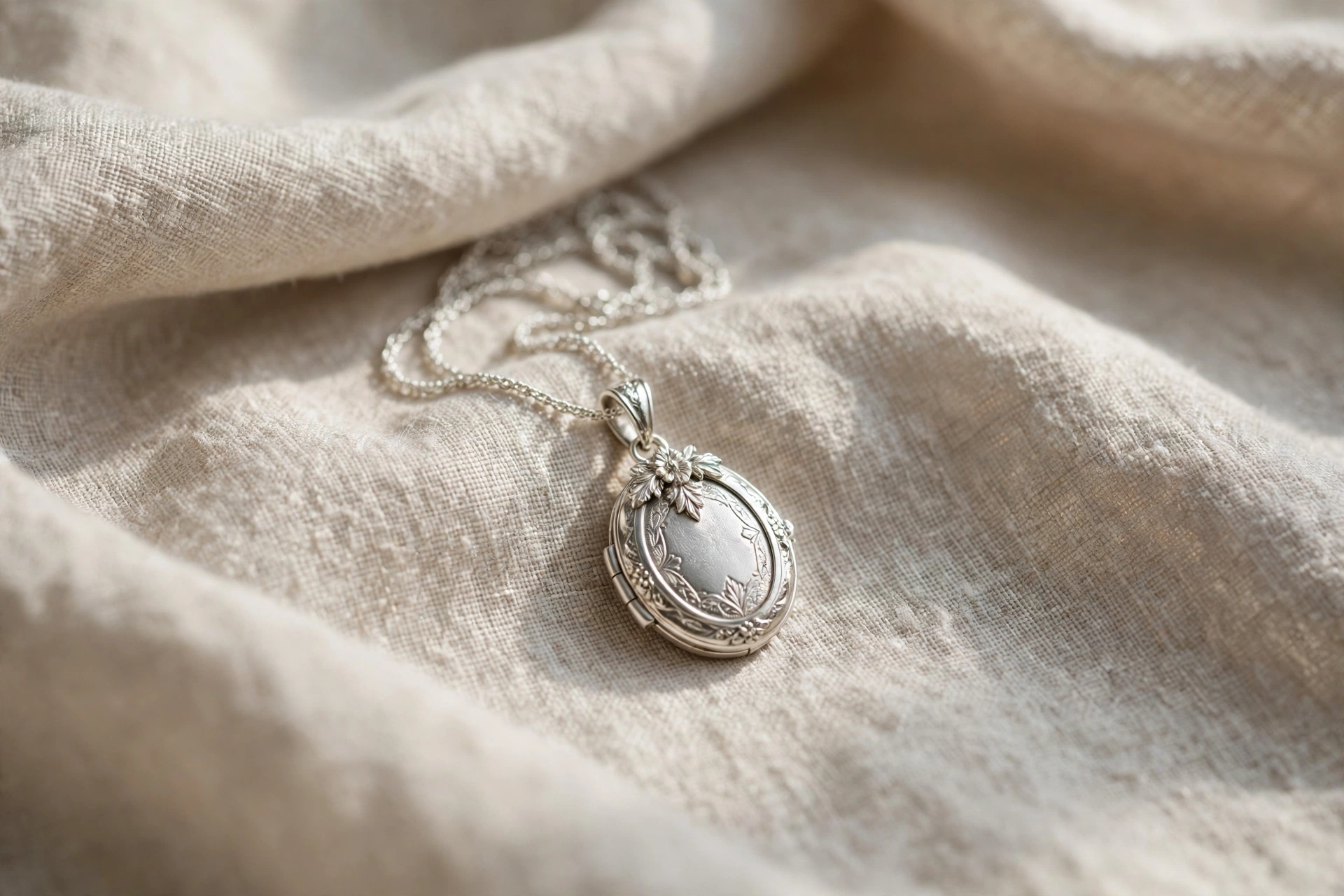
Losing someone you love changes the way ordinary objects feel. A necklace that once sat in a drawer can become the one thing you reach for every morning. Ashes jewellery works on that simple idea. It holds a small amount of cremation ashes inside a piece of jewellery, so you can keep a person close in a quiet, everyday way.
If you have searched for ashes jewellery how it works, you probably have practical questions. How much ash is needed? What happens to the ashes? How long does it take? What does it cost in the UK? This guide answers each question in plain terms.
Ashes jewellery is a type of memorial jewellery, also called keepsake jewellery or remembrance jewellery. A small amount of cremation ashes is sealed inside a pendant, ring, bracelet or charm bead, fused into glass, or turned into a lab grown diamond. Only a tiny amount is used, so the rest of the ashes stay with the family. Some families order within days of a funeral. Others wait months, or even years. A good maker will never rush you.
What Ashes Jewellery Is
Ashes jewellery is jewellery made to hold a small amount of cremation ashes. The ashes sit inside a sealed chamber, inside a layer of resin, fused into glass, or transformed into a diamond. From the outside, most pieces look like ordinary jewellery. Nobody can tell what a piece holds unless you choose to tell them.
Cremation ashes are the fine, pale powder left after cremation. They are made up largely of bone mineral, mainly calcium phosphate, reduced to a fine powder. The material is stable. It does not change, rot or fade inside a sealed piece. How long a piece lasts depends on the metal, the seal and the way you care for it.
People choose ashes jewellery for different reasons. Some want something to wear every day. Some want a piece for a specific person in the family, such as a partner, a parent or a child. Some want a matching set, so each family member has a piece made from the same ashes.
How Ashes Are Turned Into Jewellery: Resin, Glass and Diamonds
There are several main ways ashes become jewellery. Each method looks different, costs a different amount, and takes a different length of time.
Resin is the most common and most affordable method. The maker mixes a small amount of ashes into a coloured resin, pours it into a setting and leaves it to harden. The result is a smooth stone-like centre, often with the ashes visible as soft flecks or swirls.
Glass is the second method. The ashes are fused directly into molten glass at very high heat, then the glass is cooled slowly, cut and polished. The ashes appear as fine flecks suspended in coloured glass, which is then set into a sterling silver or gold mount. It is also harder wearing.
A sealed chamber is a third approach, often combined with resin or used on its own. A small chamber is built into the pendant, ring or bead. A pinch of ashes is placed inside and sealed shut, often with a screw or a resin seal. From the outside, the piece looks like any other item of fine jewellery. This is the most discreet option.
The fourth method is a cremation diamond. The carbon from the ashes is extracted, purified and grown into a real diamond in a laboratory under high pressure and high temperature. The diamond is then cut, polished and set like any other diamond.
| Method | How it looks | How long it takes | Care needs | Typical UK cost band |
|---|---|---|---|---|
| Resin | Smooth coloured stone with soft flecks or swirls, ashes partly visible | About 1 to 3 weeks | Needs most care, avoid heat, sunlight and harsh chemicals | Lowest, often from around £50 for a simple silver pendant |
| Glass | Coloured glass with fine flecks, clearly visible and decorative | About 2 to 4 weeks | Hard wearing, treat like fine glass jewellery | Mid range, often from around £150 for a silver piece |
| Sealed chamber | Looks like ordinary jewellery, ashes hidden inside | About 1 to 3 weeks | Care depends on the metal, keep the seal dry | Low to mid range, similar to resin and glass |
| Ceramic | Matte, earthy bead or pendant, ashes held in the glaze or clay | About 2 to 4 weeks | Hard wearing but can chip if dropped | Mid range, varies by maker |
| Cremation diamond | A real lab grown diamond, set like any other diamond | Several months, often around 6 to 12 months | Care like any diamond, hard and durable | Highest, from around £600 for a small stone, rising to several thousand pounds |
The Process Step by Step: From Ordering to Wearing It
Ordering ashes jewellery can feel daunting, especially if you have never sent ashes through the post. The process is straightforward, and reputable UK makers have handled it many times.
First, choose your piece and your maker. Look at designs, metals and prices on the maker website. Read reviews if you can find them. Check that the maker is based in the UK if you want UK delivery and UK consumer protection. Compare turnaround times, guarantees and what each price includes.
Second, you place a small amount of ashes in the sealable bag from the collection kit the maker sends you. Most makers need only a small amount, typically around half a teaspoon or less for each piece. Send a little more if you are unsure, but not the whole urn. Keep the rest safely at home.
Third, you post the ashes back using the prepaid envelope or label, using the tracked service the maker recommends. Keep the tracking number. Reputable makers confirm safe receipt by email once your parcel arrives.
Fourth, the maker creates your piece. For resin, glass or sealed chamber jewellery, this usually takes one to three weeks from the day your ashes arrive. For a cremation diamond, the process takes several months.
Fifth, the finished piece is checked and sent back to you, usually with a certificate of authenticity and any unused ashes in a sealed bag. Check the piece as soon as it arrives, and contact the maker straight away if anything looks wrong.
Types and Styles of Ashes Jewellery
Ashes jewellery comes in almost every style of jewellery, so you can choose something that fits the person it honours and the person who will wear it. Pendants are the most popular choice. They are easy to wear every day, they suit most outfits, and they come in many shapes, from simple round pendants to hearts, crosses, teardrops and stars.
Rings are a close second. An ashes ring usually holds the ashes in a small stone or in a sealed chamber in the band. Rings are more exposed to knocks than pendants, so the metal and the setting matter more. Sterling silver and 9 carat gold are common choices. A bezel setting, which wraps around the stone, protects it better than a prong setting on a ring worn daily.
Bracelets and charm beads suit people who already wear a charm bracelet. The ashes are held in one bead, which sits alongside ordinary beads. This is a gentle option if you want the memorial to be part of a larger piece rather than the whole piece. Earrings are also available, usually as studs with a small ashes stone, although they are less common than pendants and rings.
Colour is part of the choice too. Resin and glass pieces come in many colours, and families often pick a favourite colour of the person who died, or their birthstone colour. Our birthstone jewellery guide explains what each birth month stone means, which can help if you want to add a birthstone colour to an ashes piece.
How Much Ashes Jewellery Costs in the UK
Price is one of the first questions most families ask, and the honest answer is that it varies widely. The method, the metal, the size and the maker all affect the price. A simple resin pendant in sterling silver from a small UK maker can cost from around £50. A similar pendant from a larger studio, or in gold, can cost several times that.
Resin pendants are the most affordable route into ashes jewellery. Small makers on UK marketplaces list simple sterling silver resin pendants from around £50, while established UK studios list silver resin rings from around £155 and silver pendants from around £150 to £170. Gold versions of the same designs cost more, often from around £400 to £500 and upwards, because of the metal alone.
Cremation diamonds are in a different price band altogether. UK diamond growers list memorial diamonds from around £600 for a small yellow stone of about 0.10 carats, and from around £1,400 for a 0.25 carat stone from another grower. Larger stones cost several thousand pounds, and the price rises with size and with colour, because a colourless diamond needs a longer and more complex process than a natural amber coloured one.
Several things drive the price up or down. The metal is usually the biggest factor: gold costs far more than silver, and platinum costs more again. The size of the stone matters too, especially for diamonds. Personalisation, such as engraving or a bespoke design, adds to the cost.
How to Choose a Maker: Questions to Ask First
Choosing a maker is the most important decision in this process, because you are trusting someone with something irreplaceable. Take your time, and do not be afraid to ask questions. A good maker will welcome them.
Start with the basics. Is the maker based in the UK? Do they make each piece by hand, or do they send the work elsewhere? How long have they been making memorial jewellery? Can they show you photos of finished pieces, not just computer images?
Ask how the ashes are handled. How much do they need? How are the ashes stored while the piece is made? What happens to the ashes they do not use? A reputable maker will return unused ashes to you with the finished piece.
Ask about the materials. Is the metal hallmarked? Is the silver sterling silver, marked 925? Is the gold solid, and what carat is it? What exactly is the stone made from: resin, glass, ceramic or a lab grown diamond?
Ask about the guarantee and the certificate. Does the piece come with a certificate of authenticity? What does the guarantee cover, and for how long? What happens if the stone cracks, the setting loosens or the clasp breaks? A maker who stands behind their work will answer these questions clearly and in writing.
How Long It Takes, and What Happens to Leftover Ashes
For resin, glass, ceramic and sealed chamber jewellery, most UK makers quote one to three weeks from the day your ashes arrive. That time covers making the stone, setting it, polishing the piece and checking it before posting. Some makers are faster, some are slower, and busy periods such as Christmas can add extra days. Always check the current turnaround time before you order, especially if you need the piece by a particular date.
Cremation diamonds take far longer. The carbon must be purified, then grown into a diamond in a laboratory, then cut and polished. Growers commonly quote several months, and the wait can extend to around a year for a larger stone. One UK grower quotes an average of around 11 months.
Only a small amount of ashes is used for each piece, typically around half a teaspoon or less. That means one set of ashes can be used for several pieces, one for each family member, with ashes left over. The leftover ashes are yours. A reputable maker returns any unused ashes to you with the finished piece, in a sealed bag, along with the certificate.
How to Care for Ashes Jewellery
Ashes jewellery is made to be worn, not stored away, but a little care keeps it looking its best. The care routine depends on the method used, so check the maker instructions that come with your piece.
Resin pieces need the most care. Keep them away from strong heat, direct sunlight and harsh chemicals. Do not wear a resin piece in a hot bath, a sauna or a sunbed. Remove it before swimming, showering and cleaning, and before applying perfume, hairspray or hand cream.
Sealed chamber pieces need care for the metal and the seal. Keep the piece dry where you can, and remove it before swimming or showering to protect the metal and the clasp. Do not try to open a sealed chamber yourself. If the seal ever looks loose or damaged, stop wearing the piece and contact the maker for advice.
For all types, store the piece separately from other jewellery to avoid scratches, and keep it in a lined box or a soft pouch. These small habits add years to the life of any piece of jewellery, and they matter more for a piece you can never replace. Our guide on milestone birthday jewellery gifts also touches on keeping meaningful pieces in good condition, which applies just as much here.
Ashes Jewellery for Pets vs People
The process for pet ashes jewellery is very similar to the process for human ashes jewellery. The same methods are used: resin, glass, sealed chambers and, less often, cremation diamonds. The same small amount is needed, and the same care rules apply. The difference is in the meaning and the design, not in the making.
Pet ashes pieces often use a paw print, a bone or a pet name engraving. They may also hold a lock of fur alongside or instead of the ashes, which is a popular choice for pet owners. If you are looking for a piece to remember a pet, our pet ashes memorial jewellery guide covers the pet process in full, including how fur is used and what to ask a pet memorial maker.
Human ashes pieces tend to be simpler and more discreet. Many people choose a plain pendant or ring that looks like ordinary jewellery, with no visible sign of what it holds. The choice is personal. Some people want the memorial to be visible, with coloured glass or a visible fleck. Others want it hidden, with only the wearer knowing what the piece contains.
Frequently Asked Questions About Ashes Jewellery
How much ashes do you need for ashes jewellery?
Very little. Most UK makers need only around half a teaspoon or less for each piece. You can send a little more if you are unsure, but do not send the whole urn. Any ashes the maker does not use should be returned to you with the finished piece.
Is ashes jewellery safe to wear every day?
Yes, if you choose the right piece and care for it properly. Resin and glass pendants suit daily wear well. Rings need more care, because they knock against things throughout the day. A bezel setting protects the stone better than a prong setting on a ring.
How long does ashes jewellery take to make?
For resin, glass, ceramic and sealed chamber jewellery, most UK makers quote one to three weeks from the day your ashes arrive. A cremation diamond takes far longer, usually several months, and sometimes around a year for a larger stone, because the diamond must be grown in a laboratory.
How much does ashes jewellery cost in the UK?
It varies by method, metal and maker. A simple sterling silver resin pendant can cost from around £50. Silver glass or sealed chamber pieces often start from around £150. Gold pieces cost more, because of the metal. A cremation diamond starts from around £600 for a small stone and rises to several thousand pounds for a larger one.
Can you see the ashes in ashes jewellery?
It depends on the method. In resin and glass pieces, the ashes are usually visible as fine flecks or soft swirls in the coloured stone. In a sealed chamber piece, the ashes are hidden inside, and the piece looks like ordinary jewellery. In a cremation diamond, the ashes are transformed into the diamond itself, so there is nothing visible to see.
What happens to the ashes that are not used?
A reputable maker returns any unused ashes to you with the finished piece, in a sealed bag, along with the certificate of authenticity. Only a small amount is used for each piece, so the rest stays with the family.
Ashes jewellery is a quiet way to keep someone close. It does not need to be expensive, and it does not need to be elaborate. A simple silver pendant, made with care and worn every day, can mean more than the most costly piece in a shop window.