
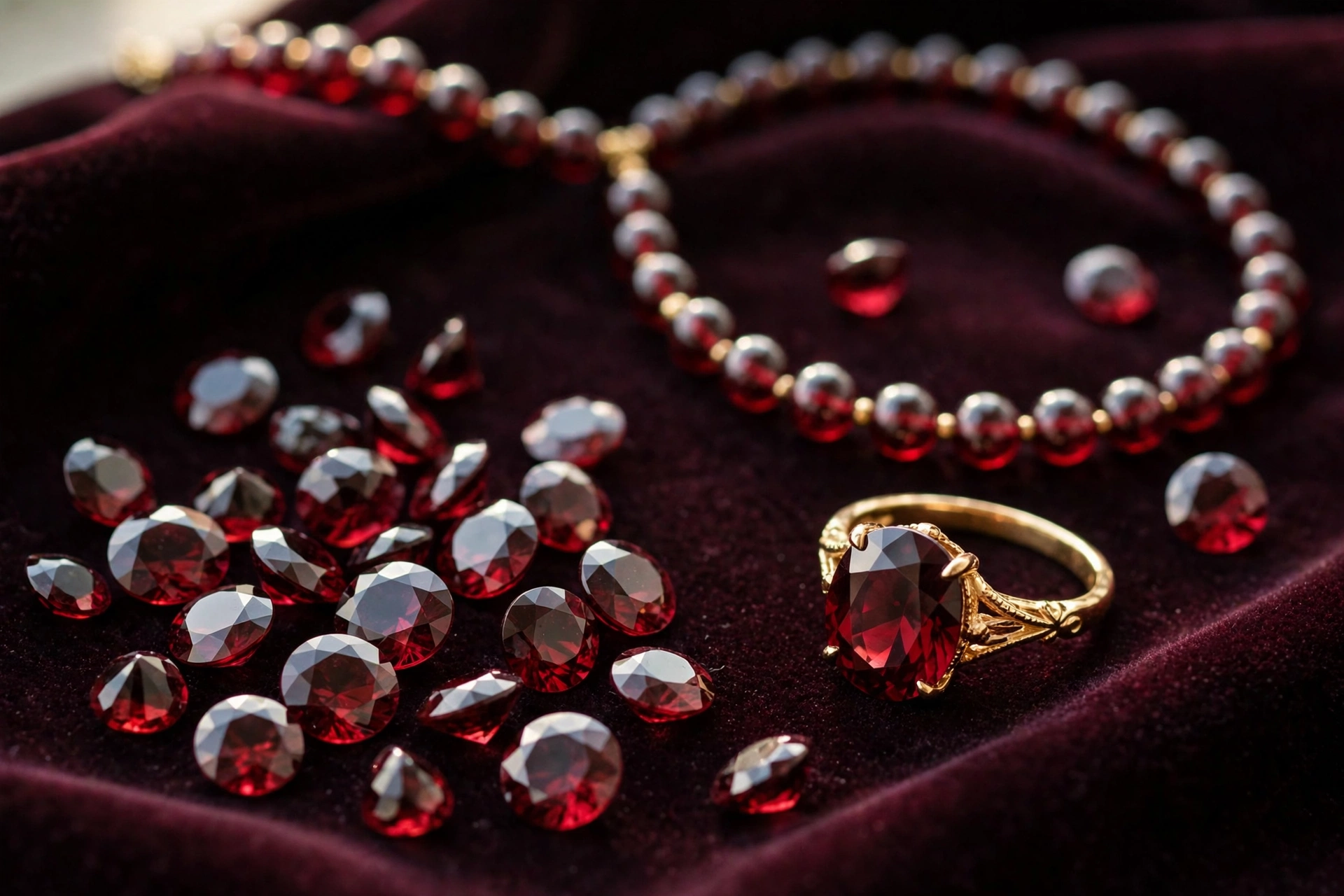
Garnet is the birthstone for January. It is a deep red gemstone that has been worn as jewellery for thousands of years. If you were born in January, garnet is your birthstone. If you are buying a gift for someone born in January, garnet is the natural choice.
This guide explains what garnet means, which colours it comes in, how to wear it, which types of garnet jewellery to choose, and how to care for it. Everything here is about garnet and January only. For the full list of birthstones by month, see our birthstone jewellery guide to birth month stones.
What Is the January Birthstone?
The January birthstone is garnet. It is one of the oldest gemstones used in jewellery. Garnet is not a single stone. It is a family of minerals that share a similar crystal structure. Most people know garnet as a deep red stone, but the family includes other colours too.
The modern list of birthstones by month was standardised in the early twentieth century. Garnet has been linked with January on that list ever since.
When jewellers talk about garnet, they usually mean red garnet. Red garnet is the most common type and the most affordable. It is the stone you will see in most January birthstone rings, necklaces, and earrings.
What Does Garnet Mean?
Garnet takes its name from the Latin word granatum, which means pomegranate. The stone was named for its likeness to the deep red seeds of a pomegranate. That link to the fruit has stayed with garnet for centuries.
In older traditions, garnet was linked with protection, strength, and safe travel. Travellers once carried garnet as a charm on long journeys. It was also linked with friendship and loyalty, which is why it is still a popular gift between close friends.
Today, garnet is linked with January birthdays, with second wedding anniversaries, and with gifts that mark loyalty and lasting love. Garnet is the traditional gift for a second wedding anniversary. A garnet gift for a January birthday carries both meanings at once, which makes it a thoughtful choice.
It is worth saying plainly that these meanings come from tradition and folklore. They are part of the story of the stone, not proven facts. People choose garnet because they like the colour, the history, and the link to January.
What Colours Does Garnet Come In?
Most garnets are red, but red is not the only colour. The garnet family covers a wide range. The colour depends on which variety of garnet the stone is, and on the minerals inside it.
Red garnet is the classic January birthstone. It ranges from a bright, clear red to a deep wine red that looks almost black in low light. The best red garnets show a rich, even colour when held up to the light. Stones that look too dark or too brown are less attractive, even if they are large.
Other garnet colours include green, orange, pink, purple, yellow, and colourless. Green garnet is rare and can be costly. Orange garnet, often sold as spessartine or hessonite, has a warm, fiery tone. Pink and purple garnets, often called rhodolite, have a softer, romantic look.
For a January birthstone gift, red garnet is the right choice. The other colours are interesting for collectors, but they do not carry the same link to January. A green or orange garnet is a beautiful stone, but it is not what most people mean when they ask for the January birthstone.
Garnet Types Compared
The table below compares the main garnet types you are likely to see in shops. Use it to check what you are being offered before you buy.
| Garnet type | Typical colour | How common it is | Best for |
|---|---|---|---|
| Almandine | Deep red, often with a brown tone | Very common | Everyday rings, pendants, and earrings |
| Pyrope | Bright, clear red | Common | Fine jewellery and January birthday gifts |
| Rhodolite | Pinkish red to purple red | Less common | Rings and pendants with a softer look |
| Spessartine | Orange to orange red | Less common | Statement pieces and collectors |
| Hessonite | Cinnamon orange to brown orange | Less common | Vintage style jewellery |
| Tsavorite | Vivid green | Rare | High end pieces and collectors |
| Demantoid | Bright green with high sparkle | Rare | Fine jewellery and collectors |
When you shop, ask which type of garnet is in the piece. A good jeweller will tell you. If the label says only garnet, it is usually almandine or pyrope. That is normal for January birthstone jewellery, and it is nothing to worry about.
A Short History of Garnet
Garnet has been used in jewellery for a very long time. Archaeologists have found garnet beads in Egyptian tombs from thousands of years ago. Garnet was also used in ancient Rome, where it was carved into signet rings and seals.
In the Middle Ages, garnet was popular across Europe. It was set into brooches, rings, and church ornaments. Garnet from Bohemia, in what is now the Czech Republic, became famous in the eighteenth and nineteenth centuries. Bohemian garnet jewellery, with small deep red stones set close together, is still collected today.
Garnet was named as the January birthstone in the standard modern list published in 1912. That list is still the one most jewellers use today. Since then, garnet has stayed firmly linked with January, and January birthday jewellery almost always features a red garnet.
How to Wear Garnet Jewellery
Garnet is a versatile stone. Its deep red colour works with many outfits and many skin tones. It looks warm against gold and cool and striking against silver. It suits both everyday wear and formal occasions.
For everyday wear, a small garnet pendant or a pair of garnet stud earrings is an easy choice. The colour is rich enough to add interest to a plain outfit, but the stones are small enough to wear to work or to run errands. Garnet studs pair well with a white shirt, a navy jumper, or a black dress.
For formal occasions, a larger garnet ring or a garnet necklace makes a stronger statement. A deep red garnet looks striking with black, navy, cream, and charcoal. Avoid pairing garnet with bright red clothes, as the colours can clash rather than complement each other.
Garnet suits most skin tones. On fair skin, a bright red garnet stands out clearly. On medium and olive skin, a deep wine red garnet looks warm and rich. On dark skin, garnet has a strong, jewel like glow. If you are unsure, hold the piece against your hand in natural light before you buy.
Garnet Jewellery Types Explained
Garnet is set into every common type of jewellery. Each type suits a different use, and each has its own points to check before you buy.
Garnet Rings
Garnet rings are the most popular January birthstone gift. They range from simple solitaire rings to cluster rings and signet rings. A solitaire garnet ring shows off a single stone. A cluster ring groups small garnets together for more sparkle.
Check the setting before you buy a garnet ring. A ring worn every day will take knocks, so a bezel setting, where metal wraps around the edge of the stone, protects the garnet better than a high claw setting.
Garnet Necklaces and Pendants
A garnet pendant is a good choice for a January birthday gift. Pendants take less wear than rings, so the stone stays in better condition. A single garnet on a fine chain is elegant and easy to wear. A garnet necklace with several stones makes a stronger statement.
Check the chain length before you buy. A pendant that sits at the collarbone suits most necklines. If the gift is for someone else, a standard 45 centimetre chain is a safe choice.
Garnet Earrings
Garnet stud earrings are a classic January gift. They are easy to wear, they suit most face shapes, and they go with almost any outfit. Garnet drop earrings suit evening wear and formal occasions.
Check the backs of studs and the weight of drop earrings. Heavy drops can pull on the earlobe over a long evening. For everyday wear, small studs with secure butterfly backs are the practical choice.
Garnet Bracelets
Garnet bracelets come as tennis bracelets, beaded bracelets, and bangles. Beaded garnet bracelets are popular and affordable, and they make a good January birthday gift. Bracelets take more knocks than pendants, so for daily wear choose a sturdy setting and small stones.
How to Choose a Garnet: Buying Tips
Buying a garnet is simpler than buying many gemstones, because garnet is common and affordable. Even so, a few checks will help you buy well.
First, look at the colour. Hold the stone up to the light. A good red garnet should show a clear, rich red. It should not look black, brown, or muddy. Stones that look too dark lose their colour indoors, and stones that look brown have less appeal. Colour matters more than size for garnet.
Second, look at clarity. Most garnets have some small marks inside the stone, which gemmologists call inclusions. A few small inclusions are normal. Large dark marks, cracks, or cloudy patches are not. Hold the stone against a white background and look through it. The stone should be lively and clear, not dull.
Third, look at the cut. A well cut garnet returns light well and looks bright. A poorly cut garnet looks flat and dark, even if the colour is good. Round, oval, and cushion cuts suit garnet well. If the stone looks dark from the top, the cut may be too deep.
Fourth, check the setting and the metal. Garnet suits yellow gold, white gold, rose gold, and silver. Yellow gold warms the red of the stone. White gold and silver give a cooler, more modern look. Rose gold suits the pinker garnets, such as rhodolite. Make sure the claws or bezel hold the stone firmly, and that there is no wobble when you touch it.
Fifth, ask about treatment. Most garnets are not treated, which is one of their attractions. A reputable jeweller will tell you if a stone has been treated. If they will not say, shop elsewhere.
Finally, buy from a jeweller you trust, and ask for a receipt that states the type of garnet and the metal. Keep the receipt with the piece, as it matters for insurance and for repairs. Set a budget before you shop and keep to it. Garnet is one of the more affordable birthstones, and a smaller stone with good colour and a clean cut will look better than a large, dark stone.
If you are buying a garnet gift for a January birthday, our milestone birthday jewellery gifts guide has ideas for marking a special birthday with jewellery.
How to Care for Garnet Jewellery
Garnet is a fairly hard stone, with a hardness of about 6.5 to 7.5 on the Mohs scale. That means it suits everyday wear, but it still needs care. It can scratch, chip, and lose its shine if it is treated roughly.
Clean garnet jewellery with warm water, a drop of mild washing up liquid, and a soft brush or cloth. Soak the piece for a few minutes, brush gently around the setting, rinse in clean water, and dry with a soft cloth. Do this every few weeks if the piece is worn often. The same gentle method works for the metal setting too, as our guide to how to clean silver, gold, and costume jewellery at home explains.
Do not use harsh chemicals on garnet. Avoid bleach, acetone, and strong cleaning fluids. Take garnet rings off before using cleaning products, swimming in a chlorinated pool, or doing heavy work with your hands. Chlorine and household chemicals can damage the metal setting as well as the stone.
Do not use a steam cleaner or an ultrasonic cleaner on garnet unless a jeweller tells you it is safe for that particular piece. Some garnets have fractures that a steam cleaner can make worse. Warm soapy water is the safe choice for almost every garnet piece. Store garnet jewellery separately from harder stones, as diamonds and sapphires can scratch garnet. Keep each piece in a soft pouch or a lined jewellery box with separate compartments.
Have garnet rings checked once a year by a jeweller. Claws wear down with time, and a loose stone can fall out without warning. A quick check costs little and it can save a stone. If a claw feels sharp or the stone moves when you touch it, take the ring to a jeweller straight away.
Garnet vs Other Red Gemstones
Garnet is often compared with ruby, red spinel, and red tourmaline. All four are red, but they are different stones with different prices and different qualities.
| Stone | Colour | Hardness | Typical cost |
|---|---|---|---|
| Garnet | Deep red to wine red | 6.5 to 7.5 | Affordable |
| Ruby | Bright red to pink red | 9 | High |
| Red spinel | Bright red, often vivid | 8 | Moderate to high |
| Red tourmaline | Pink red to deep red | 7 to 7.5 | Moderate |
Ruby is harder and more costly than garnet, and it is the birthstone for July, not January. Red spinel is brighter and harder than garnet, but it is less well known. Red tourmaline is similar in hardness to garnet, but it is usually pinker. Garnet is the right stone for January, and it is also the most affordable of the four, which makes it a practical choice for a birthday gift.
If you are shopping for a January birthday and you see a red stone labelled as ruby at a very low price, ask questions. It may be a garnet sold under the wrong name, or a synthetic stone. A reputable jeweller will name the stone correctly and explain the difference.
Is Garnet a Good Choice for an Engagement Ring?
Garnet is not a common choice for an engagement ring, and there is a good reason for that. It is softer than diamond and sapphire, so a garnet engagement ring worn every day will show wear sooner. The claws will need checking more often, and the stone may need repolishing over the years.
Even so, garnet can work as an engagement ring for the right person. It suits someone who was born in January, or a couple who want a coloured stone with a personal meaning. If you choose garnet for an engagement ring, pick a bezel setting or a low, protected setting, and have the ring checked every year. A well made garnet ring can last for many years with care.
For a detailed look at ring shopping in London, our guide to planning a visit to Hatton Garden for ring shopping explains what to expect from the jewellers there.
Frequently Asked Questions
What is the birthstone for January?
The birthstone for January is garnet. It is a deep red gemstone. It has been linked with January on the modern birthstone list since 1912, and it is the stone used in almost all January birthday jewellery.
What does garnet mean?
Garnet is linked by tradition with protection, strength, loyalty, and safe travel. It is also the traditional gift for a second wedding anniversary. These meanings come from folklore and history, not from proven fact, but they are part of why garnet is a popular gift.
What colour is January birthstone garnet?
January birthstone garnet is usually a deep red, ranging from bright red to dark wine red. Other garnet colours exist, including green, orange, and pink, but red is the colour linked with January. When people ask for the January birthstone, they mean red garnet.
Is garnet expensive?
Garnet is one of the more affordable birthstones. Common red garnet, such as almandine and pyrope, is widely available and modestly priced. Rare green garnets, such as tsavorite and demantoid, are much more costly, but they are not the usual January birthstone. A good red garnet ring or pendant can be bought without a large budget.
Can you wear garnet every day?
Yes, you can wear garnet every day, but take care with rings. Garnet has a hardness of about 6.5 to 7.5, so it can scratch or chip if it is knocked. A bezel setting protects the stone best. Take garnet rings off for heavy work, cleaning, and swimming, and have the setting checked once a year.
How do I clean garnet jewellery?
Clean garnet with warm water, a drop of mild washing up liquid, and a soft brush or cloth. Rinse in clean water and dry with a soft cloth. Avoid harsh chemicals, bleach, and acetone. Do not use a steam cleaner unless a jeweller says it is safe for that piece. Store garnet separately from harder stones such as diamonds, which can scratch it.
Garnet is a stone with a long history and a clear link to January. It is affordable, it comes in a rich deep red, and it suits almost every type of jewellery. Whether you were born in January or you are buying for someone who was, a garnet piece is a gift with meaning, colour, and staying power.