
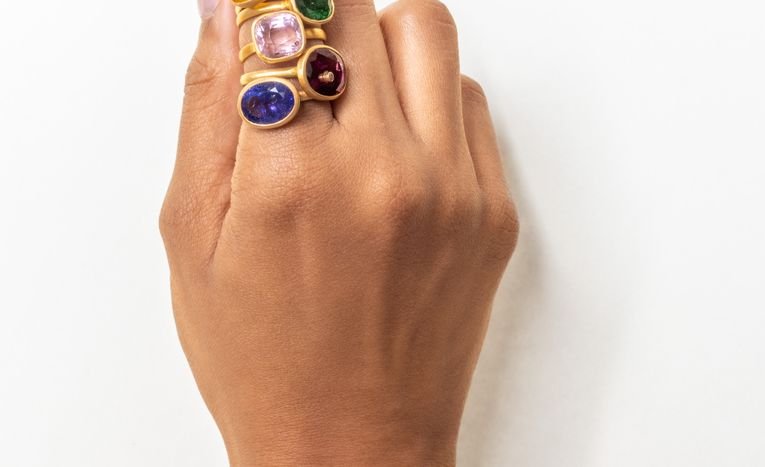
Birthstone jewellery has been worn as a personal, symbolic gift for centuries, with each month of the year traditionally linked to a particular gemstone. Whether you are choosing a piece for yourself or buying a gift for someone else, knowing the stone, its meaning and its practical care requirements makes the choice a lot easier. This guide runs through every birth month, what each stone traditionally represents, and how to pick jewellery that will actually stand up to daily wear.
What is a birthstone, and where does the tradition come from?
A birthstone is a gemstone traditionally associated with the month a person was born. The idea has roots going back centuries, with some historians tracing an early connection to the twelve stones described in the Book of Exodus, later linked to the twelve months of the year and the signs of the zodiac. The modern list used by jewellers today was standardised in the early twentieth century and has been added to over time as more gemstones became widely available.
Birthstones by month
| Month | Primary birthstone | Typical colour |
|---|---|---|
| January | Garnet | Deep red |
| February | Amethyst | Purple |
| March | Aquamarine | Pale blue |
| April | Diamond | Clear or white |
| May | Emerald | Green |
| June | Pearl or Moonstone | White or iridescent |
| July | Ruby | Red |
| August | Peridot | Yellow-green |
| September | Sapphire | Deep blue |
| October | Opal or Tourmaline | Multicoloured or pink |
| November | Topaz or Citrine | Golden yellow |
| December | Turquoise or Tanzanite | Blue-green or violet-blue |
Several months, including June, October, November and December, have more than one recognised birthstone because the modern list was expanded over time to include gemstones that became more widely available or affordable after the original list was standardised. Both stones are considered equally valid, so the choice usually comes down to colour preference, budget and durability.
Choosing a stone for everyday wear
Not every birthstone suits daily wear equally well. Hardness matters more than most buyers realise, since a softer stone is far more likely to scratch or chip if worn on a ring that knocks against things throughout the day. Diamonds, sapphires and rubies rank among the hardest gemstones and hold up extremely well in rings worn every day. Softer stones such as opal, pearl and moonstone are better suited to earrings, pendants or occasional-wear rings, where they are less exposed to daily knocks.
Durability at a glance
- Best for daily-wear rings: diamond, sapphire, ruby, garnet
- Better suited to pendants or earrings: opal, pearl, moonstone, turquoise
- Needs extra care around chemicals and knocks: emerald, which can be more brittle than its hardness rating suggests
Caring for birthstone jewellery
Most gemstone jewellery benefits from being removed before swimming, cleaning or exercising, since chlorine and household chemicals can dull certain stones over time. Store pieces separately from one another to avoid scratching, and have prong settings checked periodically by a jeweller, particularly for rings worn daily, since a loose setting is the most common reason a stone is lost.
Frequently asked questions
Can I wear a birthstone that is not my own birth month?
Yes. Birthstones are a tradition rather than a rule, and plenty of people choose a stone purely for its colour or meaning rather than strictly by birth month. It is entirely a matter of personal preference.
Which birthstone is the most durable for an engagement or everyday ring?
Diamond and sapphire are generally considered the most durable choices for a ring worn every day, since both rank highly for hardness and resist scratching far better than softer stones such as opal or pearl.
Do birthstone colours ever vary?
Yes, natural variation is normal. Stones such as sapphire and tourmaline occur in a range of colours beyond the shade most commonly associated with them, so two pieces described as the same birthstone can still look noticeably different.
Our recommendation
If you are buying a birthstone ring intended for daily wear, prioritise hardness first and sentiment second, and lean towards diamond, sapphire or garnet depending on the birth month in question. For a pendant or a pair of earrings worn less often, softer, more decorative stones such as opal or moonstone are a lovely choice, since they are handled and knocked far less than a ring. Whichever stone you choose, a well-made prong or bezel setting will do more for the longevity of the piece than the stone itself.