
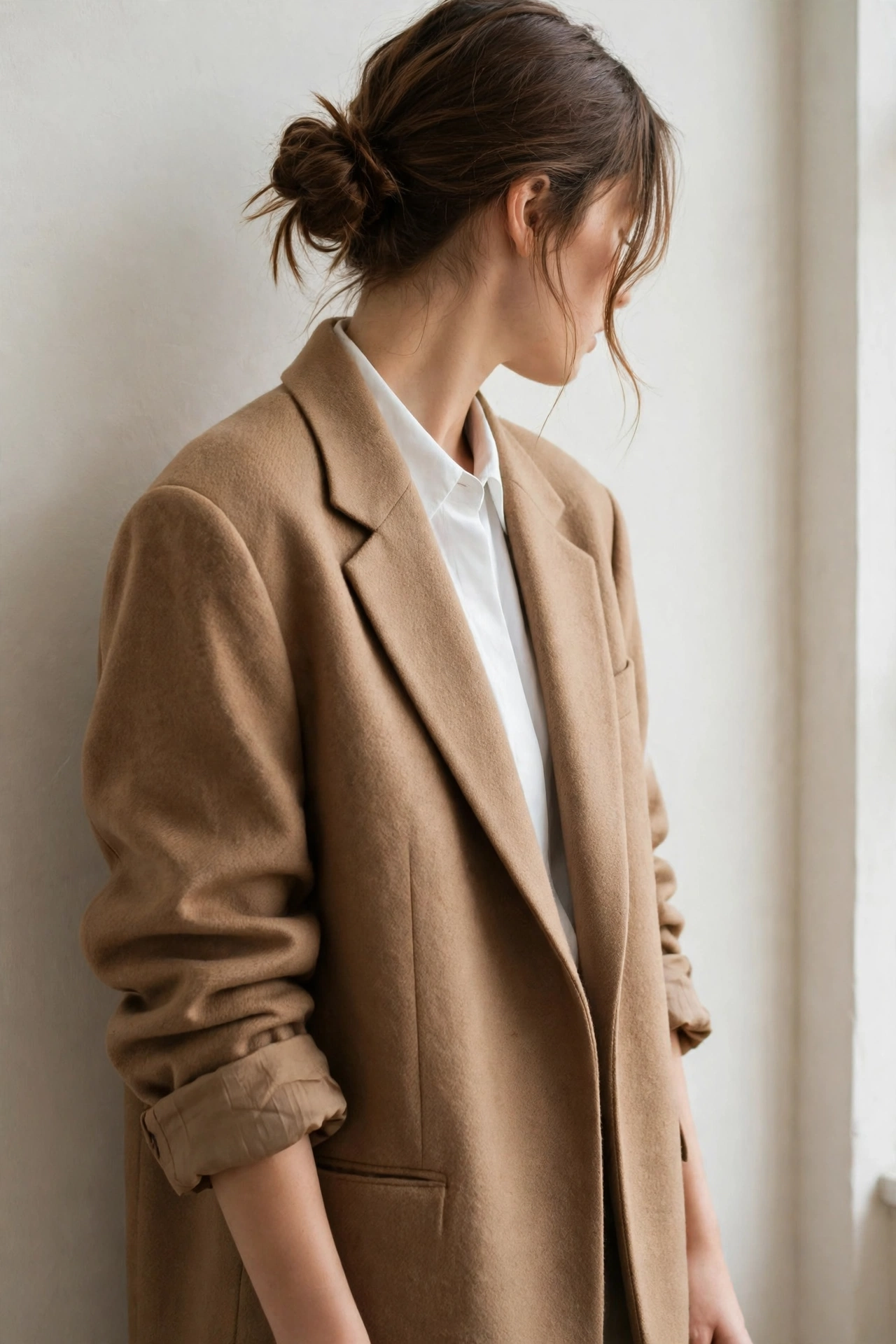
An oversized blazer is one of the easiest ways to look smart without trying hard. It adds structure to jeans, softens a dress, and turns a plain outfit into a finished one. The trick is balance. An oversized blazer works when the rest of the outfit is slim and fitted, and it fails when everything is oversized at once.
The short answer: keep the shoulders right and balance the volume below
Choose an oversized blazer whose shoulder seams sit just past your shoulders, not halfway down your arms. The body should be roomy, but the shoulders should still look like yours. If the shoulders droop, the blazer looks borrowed, not oversized. If the shoulders fit, the rest of the volume looks deliberate.
Then balance the volume below. Wear slim trousers, straight jeans or a fitted skirt with an oversized blazer, and keep the top underneath fitted. A slim bottom shows your shape and stops the outfit looking shapeless. Wide trousers with an oversized blazer can work, but only if the top underneath is tucked in and the waist shows.
Roll the sleeves to the forearm, or push them up and fold the cuff once. It shows your wrists, it stops the sleeves covering your hands, and it makes the blazer look relaxed instead of too big. This one trick fixes most oversized blazers in seconds.
How an oversized blazer should fit
Oversized does not mean any size. A blazer that is two sizes too big is not oversized, it is the wrong size. The right oversized fit has shoulder seams that sit about two fingers past your own shoulders. The body is roomy through the chest and waist, and the length ends around the hip or just below it. The sleeves end at your wrist bone, or just past it, so you can roll them up neatly.
Try it on with the outfit you plan to wear underneath. A blazer that fits over a T-shirt may be too tight over a chunky knit, so check both. Button it up and sit down in it. If it pulls across the chest when buttoned, it is too small, however oversized it looks open. If it hangs straight and the lapels lie flat, the fit is right.
Check the back in a mirror. The back should fall in a clean line from the shoulders to the hem, with no bunching at the waist and no pulling at the shoulders. A blazer that looks good from the front and bad from the back is not the right one. Walk in it, sit in it, and reach forward. If it restricts your arms, it is too small in the shoulders, and no amount of styling will fix that.
The proportion rules
Proportion is the whole secret of styling an oversized blazer. One oversized piece per outfit is the rule. The blazer is the oversized piece, so everything else should be fitted or straight. A fitted top underneath, slim trousers or a straight skirt below, and shoes that suit the occasion. That is the formula, and it works every time.
Show your waist, or show your legs, but show one of them. Tuck your top in, half tuck it, or belt the blazer at the waist. If you show neither, the outfit has no shape, and the blazer wears you instead of the other way round. A belt over the blazer is the fastest way to add shape, and it works on almost every oversized blazer.
Keep the length in mind. A blazer that ends at the hip works with most outfits, because it shows enough of your legs to balance the volume. A blazer that ends at mid thigh works with slim trousers or a short skirt, but it can shorten your legs if you wear it with wide trousers. If you are petite, choose a blazer that ends at the hip and no longer, so your legs do not disappear.
| What you wear below | Works with an oversized blazer? | Why |
|---|---|---|
| Slim straight jeans | Yes, the easiest pairing | Slim bottom balances the volume on top |
| Straight leg trousers | Yes | Clean line, shows the blazer shape |
| Wide leg trousers | Yes, with a tucked in top | Needs a visible waist to avoid shapelessness |
| Fitted midi skirt | Yes | Fitted skirt balances the loose blazer |
| Mini skirt | Yes, for evening | Shows legs, balances the long blazer |
| Wide palazzo trousers | Usually no | Too much volume top and bottom |
| Baggy jeans | Usually no | Two oversized pieces, no shape at all |
What to wear underneath
What you wear underneath an oversized blazer matters as much as the blazer itself. A fitted top is the safest choice, because it keeps the outfit slim where the blazer is loose. A plain T-shirt, a fine knit, a fitted shirt or a camisole all work. Tuck the top in, or half tuck it, so your waist shows and the outfit has a shape.
A shirt under an oversized blazer is the smartest option, and it works for the office and for smarter days out. Choose a shirt in white, pale blue or a fine stripe, and keep the collar sitting flat. Button the shirt to the top for a formal look, or leave the top two buttons open for a relaxed look. A shirt with a collar adds structure, which is exactly what an oversized blazer needs.
A fine knit under a blazer is the warmest option for UK weather, and it works from autumn through to spring. Choose a fine knit rather than a chunky one, because a chunky knit adds bulk under the blazer and makes the shoulders look too big. A thin roll neck under an oversized blazer is one of the smartest winter outfits there is, and it needs no jewellery at all.
A slip dress under an oversized blazer is the easiest evening outfit. The blazer softens the dress, covers the straps, and adds structure. Choose a midi length in a plain colour, and let the blazer fall open over it. The same balance idea works if you pair your blazer with wide leg trousers instead: keep the top tucked in so your waist shows.
Three outfits: office, weekend and evening
One oversized blazer can cover three parts of your week, if you change what goes with it. The blazer stays the same. The layers, shoes and accessories do the work.
Office: blazer, shirt, straight trousers and loafers
For the office, pair your oversized blazer with a white shirt, straight leg trousers in black or navy, and loafers. Tuck the shirt in fully, and keep the blazer buttoned or open, whichever looks tidier. The trousers should sit at your waist and end just above your shoe. Keep jewellery small and neat, and carry a structured bag. The whole outfit reads as smart because the blazer is the only relaxed piece, and everything else is tailored.
Choose a blazer in a plain, dark colour for the office, such as black, navy or charcoal. Avoid loud checks or bright colours at work, because they draw attention away from the outfit. If your office is formal, button the blazer when you stand and unbutton it when you sit. That is the traditional rule, and it keeps the blazer looking neat all day.
Weekend: blazer, T-shirt, straight jeans and trainers
For the weekend, wear the same blazer with a plain white T-shirt, straight jeans and clean trainers. Tuck the T-shirt in at the front, roll the blazer sleeves to the forearm, and add a cross body bag. The outfit looks relaxed but put together, because the blazer adds structure to the jeans and T-shirt.
Choose a blazer in a softer fabric for the weekend, such as a cotton blend or a light wool. A stiff, formal blazer can look too serious with jeans. A softer blazer drapes better, and it is more comfortable for a long day out. If it is cold, add a fine knit under the blazer instead of a T-shirt, and swap the trainers for ankle boots.
Evening: blazer, slip dress and heeled boots
For the evening, wear the blazer open over a slip dress in a plain colour, with heeled boots and a small bag. The blazer adds warmth and structure, and it makes a simple dress look like an outfit. Let the dress show below the blazer hem, and keep the jewellery simple: one pair of earrings is enough.
Choose a blazer in black or a dark colour for the evening, and keep the fabric matte. A shiny blazer with a shiny dress is too much shine in one outfit. If the dress is patterned, choose a plain blazer. If the dress is plain, a blazer in a subtle check can add interest without overpowering the outfit.
How to style an oversized blazer if you are petite
Petite frames can wear an oversized blazer, but the fit rules matter more. Choose a blazer that ends at the hip and no longer, because a longer blazer shortens your legs. Avoid a blazer with very dropped shoulders, because the shoulders will sit too low and the blazer will wear you. Look for a blazer labelled petite, or buy a regular one and have the sleeves shortened, which is a simple and cheap alteration.
Keep the outfit underneath short or tucked in. A cropped top, a tucked in shirt or a short skirt all show your legs and keep the outfit in proportion. Wear shoes with a small heel, such as a block heel or a pointed flat, because they lengthen your legs without hurting your feet. Avoid flat, chunky shoes with an oversized blazer if you are petite, because they make your legs look shorter.
Belt the blazer at the waist. A belt is the best trick for petite frames, because it shows where your waist is and stops the blazer hiding your shape. Choose a thin belt in a colour close to the blazer, so it does not cut the outfit in half. Wear the belt over the blazer, not under it, and keep the buckle small and plain.
Belting an oversized blazer
A belt turns an oversized blazer from a shapeless layer into a defined outfit. It works on almost every oversized blazer, and it takes ten seconds. Choose a belt that is wide enough to hold the fabric, but not so wide that it bunches the blazer. A leather belt in black or tan works with most blazers, and a thin belt works best on a lighter fabric.
Wear the belt at your natural waist, which is the narrowest part of your torso, usually just above your belly button. Do not wear it at your hips, because it will not show your shape and the blazer will still look boxy. Button the blazer first, then belt over it, so the belt holds the blazer closed. Leave the bottom button undone if the blazer pulls when you sit.
Try the belt with different outfits before you commit to it. A belted blazer over trousers looks smart and tailored. A belted blazer over a dress looks like a completely different outfit, with a clear waist and a defined shape. If the belt feels uncomfortable, try a softer fabric belt, or a blazer with a built in tie waist, which does the same job without a buckle.
Oversized blazers in UK weather
An oversized blazer is made for UK weather, because it layers well and it works in every season. In spring and autumn, wear it as your outer layer over a T-shirt or a fine knit. In winter, wear it under a long wool coat, with the blazer collar turned up against the cold. In summer, wear it over a camisole or a slip dress on a cool evening, and take it off indoors.
Choose the fabric for the season. Wool and tweed are best for autumn and winter, because they are warm and they hold their shape. Linen and cotton blends are best for spring and summer, because they breathe and they do not feel heavy. A blazer in a heavy wool will be too warm in July, and a blazer in thin linen will be too cold in January, so match the fabric to the weather.
Keep a blazer dry in the rain. Wool blazers spot in heavy rain, and linen blazers crease badly when wet. Carry a small umbrella, and wear a waterproof coat over the blazer if the rain is heavy. If your blazer gets wet, hang it on a wide hanger and let it dry naturally, away from a radiator. Never tumble dry a blazer, and never iron the lapels flat, because they will lose their shape.
Where to find one without spending much
You do not need to buy a new oversized blazer. Charity shops are full of them, because blazers are one of the pieces people give away most often. Look for wool blazers in good condition, with working buttons, clean linings and no shiny elbows. Check the shoulders, because a blazer with drooping shoulders cannot be fixed. Try it on with the outfit you plan to wear underneath, and check the fit in a mirror before you buy.
Second hand shops and online resale sites are good too, and they often have blazers from good brands at a small price. Search for your size and your preferred colour, and read the measurements rather than trusting the size label, because sizes vary between brands. A blazer that is one size up from your usual size is often the right oversized fit, so do not be afraid of a larger size if the shoulders sit right.
If you buy new, buy one good blazer in a plain colour rather than three cheap ones. A black or navy blazer in wool will work with every outfit in this guide, and it will last for years. Our guide to how to look put together on a budget has more ideas for building a smart wardrobe without spending much, including a charity-shop hit list.
Mistakes to avoid
- Wearing two oversized pieces at once: an oversized blazer with baggy jeans or wide palazzo trousers has no shape. Keep everything else fitted or straight.
- Choosing shoulders that droop: shoulder seams halfway down your arms look borrowed, not oversized. The seams should sit just past your own shoulders.
- Hiding your waist completely: an outfit with no visible waist looks shapeless. Tuck your top in, half tuck it, or belt the blazer.
- Wearing a chunky knit underneath: a thick knit adds bulk under the blazer and makes the shoulders look too big. Choose a fine knit or a shirt instead.
- Ignoring the sleeves: sleeves that cover your hands look careless. Roll them to the forearm or have them shortened.
- Mixing too many patterns: one pattern per outfit is enough. A checked blazer needs a plain top and plain trousers.
- Wearing a formal blazer with casual clothes: a stiff, formal blazer looks wrong with jeans. Choose a softer fabric for the weekend.
- Skipping the mirror check: check the back of the blazer in a mirror. Bunching at the waist or pulling at the shoulders will be the first thing other people notice.
Frequently asked questions
Can petite women wear an oversized blazer?
Yes, if the fit is right. Choose a blazer that ends at the hip and no longer, with shoulder seams just past your own shoulders. Belt it at the waist to show your shape, and wear shoes with a small heel. Avoid a blazer with very dropped shoulders, because it will wear you instead of the other way round.
What should I wear under an oversized blazer?
A fitted top is the safest choice: a plain T-shirt, a fine knit, a fitted shirt or a camisole. Tuck it in so your waist shows. A shirt is the smartest option for the office, a fine knit is the warmest for UK weather, and a slip dress is the easiest for the evening.
Can I wear an oversized blazer to the office?
Yes, if you keep the rest of the outfit tailored. Pair it with a white shirt, straight leg trousers and loafers, and choose a blazer in a plain dark colour such as black, navy or charcoal. Keep the shirt tucked in and the jewellery small. If your office is formal, button the blazer when you stand.
Should I belt an oversized blazer?
You do not have to, but belting is the fastest way to add shape. Wear the belt at your natural waist, over the buttoned blazer, and choose a belt wide enough to hold the fabric. It works best over trousers and dresses, and it is the best trick for petite frames.
Can I wear wide leg trousers with an oversized blazer?
Yes, if you show your waist. Tuck your top in fully, so the waistline is visible, and keep the blazer open or belted. Wide leg trousers with an oversized blazer and a loose top will look shapeless, because nothing shows your shape. Our guide to how to wear wide leg trousers explains the proportion rules for wide legs in full.
How do I keep an oversized blazer looking smart, not sloppy?
Fit is the difference. The shoulders should sit just past your own, the sleeves should end at your wrist, and the back should fall in a clean line. Roll the sleeves to the forearm, tuck your top in, and check the back in a mirror. A blazer that fits in the shoulders looks deliberate at any size.
Conclusion
An oversized blazer works when the shoulders fit and the rest of the outfit stays slim. Keep one oversized piece per outfit, show your waist, and roll the sleeves to the forearm. Wear a fitted top underneath, choose the fabric for the season, and belt the blazer when you want more shape. With those rules, one blazer covers the office, the weekend and the evening, and it will be one of the hardest working pieces in your wardrobe.