
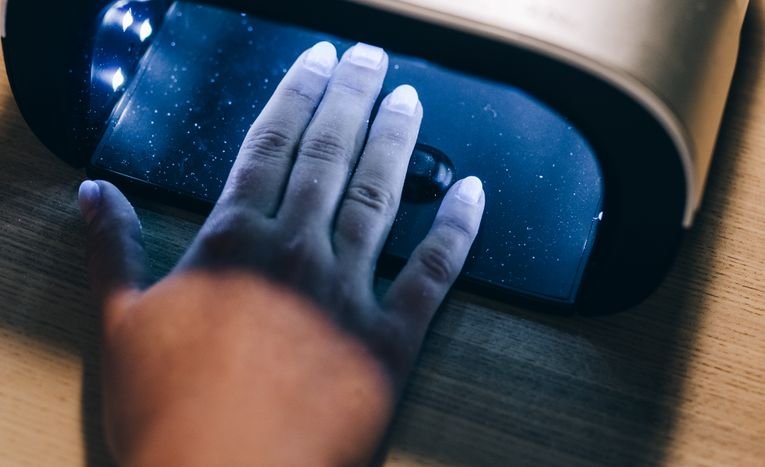
Buying your first nail lamp for gel manicures at home means choosing between UV and LED, and the terminology can be genuinely misleading, since both actually use UV light to cure gel. The real differences come down to curing speed, bulb lifespan, and which specific gel products each lamp is compatible with. This guide breaks down what actually separates the two so you can buy the right lamp for how you plan to use it.
What UV and LED lamps actually have in common
Both UV and LED nail lamps work by emitting UV-A light, the long-wave type of ultraviolet light, which triggers a chemical reaction in gel polish that causes it to harden and cure. This is a genuinely important point that gets lost in marketing: an “LED lamp” is not free of UV exposure, it simply uses light-emitting diodes to produce a more focused, higher-intensity version of that UV light rather than the broader-spectrum bulbs used in older-style UV lamps.
Where they genuinely differ
| Factor | UV lamp | LED lamp |
|---|---|---|
| Typical curing time | 2 to 3 minutes per layer | 30 to 60 seconds per layer |
| Bulb lifespan | Around 1,000 hours, needs replacing every few months | Up to 50,000 hours, rarely needs replacing |
| Gel compatibility | Cures virtually all gel formulas, including older ones | Cures most modern gels, but not every product is LED-compatible |
| Running cost over time | Higher, due to bulb replacement | Lower, longer-lasting bulbs |
| Best suited to | Occasional use, older or specialist gel products | Regular use, speed and convenience |
Why wattage matters less than it sounds
Wattage is often treated as the headline spec when comparing nail lamps, but it actually measures how much electricity a lamp draws, not directly how strong or effective its curing power is. A cheap, high-wattage lamp can still produce relatively low-intensity light that under-cures gel polish, while a well-designed lower-wattage lamp with good bulb placement can cure evenly and reliably. As a general home-use benchmark, a 36 to 48 watt LED lamp is widely recommended as sufficient for curing standard gel polishes, rubber base coats and builder gels in the expected 30 to 60 second window.
Checking your gel is actually compatible
Not every gel polish works with every lamp, which is worth checking before you buy either your lamp or your gel products. Most modern gel polish brands are formulated specifically for LED curing and will state this on the packaging, while some specialist or older-style hard gels and builder gels are formulated to require the broader UV spectrum and longer curing time of a traditional UV lamp. Mismatching gel and lamp type is a common reason a manicure ends up under-cured, sticky, or prone to early chipping.
A note on skin exposure and safety
Because both lamp types use UV light, minimising unnecessary skin exposure is a sensible precaution regardless of which you choose. Applying a broad-spectrum sunscreen to the hands before curing, or wearing UV-protective, fingertip-cut-out gloves, are both simple, low-effort ways to reduce cumulative UV exposure over repeated manicure sessions, particularly if gel manicures are a regular part of your routine rather than an occasional treat.
Frequently asked questions
Can I use an LED lamp to cure a UV-only gel product?
Not reliably. UV-only formulas are generally designed around the broader wavelength range of a traditional UV lamp, and using an LED lamp instead can result in an incomplete, under-cured finish, even if the product appears dry on the surface.
Is a more expensive nail lamp always better?
Not automatically. Price does not always correlate with curing performance, since build quality, bulb placement and genuine intensity matter more than headline wattage or cost alone. Checking reviews and compatibility with your specific gel brand is a more reliable guide than price.
How do I know if my lamp is properly curing my gel polish?
Properly cured gel polish should feel completely hard and non-tacky to the touch immediately after curing, with no sticky residue. A persistently tacky or dull finish after the recommended curing time usually points to a compatibility issue or a lamp losing intensity, particularly with an ageing UV bulb.
Our recommendation
For most people doing regular gel manicures at home, a 36 to 48 watt LED lamp offers the best balance of speed, running cost and convenience, and covers the vast majority of modern gel products on the market. Only consider a UV lamp specifically if you are using an older or specialist gel formula that explicitly requires UV curing, in which case checking product compatibility before buying either the lamp or the gel will save you a frustrating, sticky first attempt.