

A capsule wardrobe is built around a simple idea: a small, carefully chosen collection of clothes that coordinate with each other, giving you far more outfit combinations than the size of the collection suggests. The concept dates back to the 1970s, popularised by London boutique owner Susie Faux, and it remains one of the most practical ways to simplify getting dressed without sacrificing style. This guide covers the genuine essentials worth building a wardrobe around.
What actually makes a capsule wardrobe work
The core principle is coordination rather than quantity. Every piece is chosen to work with several others already in the collection, in a small range of complementary colours, so a relatively modest number of items produces a genuinely wide range of outfits. This is quite different from simply owning fewer clothes, since a poorly coordinated small wardrobe is just as frustrating to dress from as an overstuffed one.
The essential pieces
| Category | Core pieces | Why they earn their place |
|---|---|---|
| Trousers | Tailored trousers, dark denim | Work for both smart and casual outfits |
| Tops | White shirt, plain t-shirts, a fine-knit jumper | Neutral base layers that pair with almost everything else |
| Outerwear | A tailored blazer, a versatile coat | Elevates simple outfits and adapts to the weather |
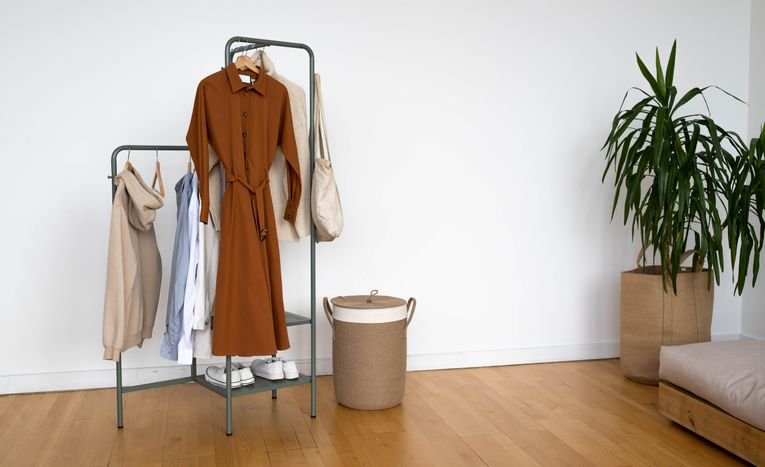
| Dresses | One versatile midi dress | Works for both daytime and evening with a change of accessories |
| Footwear | Neutral trainers, one smart shoe | Covers most occasions without needing a large shoe collection |
Choosing a colour palette first
Before buying anything, settling on two or three neutral base colours, such as navy, black or camel, plus one or two accent colours you genuinely enjoy wearing, makes every subsequent purchase easier to coordinate. This is the single step most people skip when building a capsule wardrobe, and it is usually why an otherwise well-chosen collection of separates still does not mix and match as smoothly as intended.
Quality over quantity, but not at any cost
A genuinely well-made piece in a natural fibre such as wool, cotton or linen typically lasts several times longer than a cheaper synthetic equivalent, which matters considerably more in a smaller wardrobe where each item is worn far more often. That said, quality does not have to mean the most expensive option available, since well-made pieces exist across a wide range of price points, and secondhand or vintage shopping can be a genuinely effective way to find durable, well-constructed basics without the premium price tag.
Building it gradually rather than all at once
Trying to buy an entire capsule wardrobe in one shopping trip is rarely the most successful approach, since it does not leave room to properly test how pieces actually work together in practice. Starting with a handful of genuine essentials, wearing them for a few weeks, and identifying the real gaps in your outfit combinations tends to produce a more useful, better-fitting wardrobe than buying everything speculatively upfront.
Frequently asked questions
How many items should a capsule wardrobe actually contain?
There is no fixed number, since it depends entirely on lifestyle and climate, but somewhere between 30 and 40 versatile pieces, including outerwear and shoes, is a commonly cited starting range that still allows for real variety day to day.
Does a capsule wardrobe mean giving up personal style?
Not at all. A capsule wardrobe is a structure for choosing clothes, not a specific aesthetic, and it works just as well for a bold, colourful personal style as it does for a more neutral, minimalist one, provided the coordinating colour principle is applied consistently.
Should a capsule wardrobe change with the seasons?
Many people rotate a smaller set of seasonal pieces, such as lighter fabrics in summer and warmer layers in winter, around a core of year-round basics like trousers and neutral tops, which stay in the wardrobe throughout the year.
Our recommendation
Start by choosing your core colour palette before buying anything new, then build outward from a small set of genuine essentials, tailored trousers, a white shirt, a versatile coat, testing how they work together before adding further pieces. Prioritise quality in the items you will wear most often, such as trousers and outerwear, and treat the process as gradual rather than something to complete in a single shopping trip.