
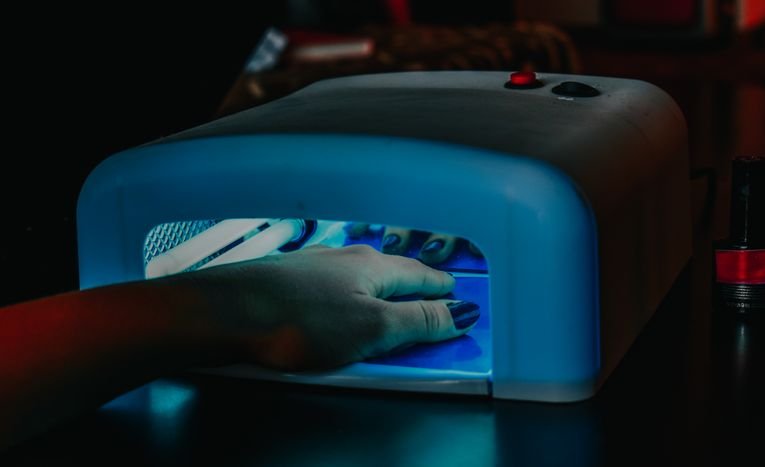
BIAB has become one of the most requested nail services in UK salons, yet plenty of people booking it are not entirely sure what makes it different from a standard gel manicure. Short for Builder In A Bottle, BIAB has genuinely changed how nail technicians strengthen and grow out natural nails, offering something between the light coverage of gel polish and the heavier structure of traditional builder gel. This guide explains exactly what BIAB is, how it works, and whether it is the right choice for your nails.
What does BIAB actually stand for?
BIAB stands for Builder In A Bottle, a term that describes the packaging format rather than a single specific product. It refers to a soak-off builder gel that comes in a polish-style bottle with an integrated brush, rather than the traditional pot and separate brush used for older-style builder gels. The name originated with a specific product from the brand The Gel Bottle, though it is now used generically across the industry to describe this style of product, in much the same way “Hoover” became shorthand for vacuum cleaners generally.
How BIAB differs from regular gel polish
Regular gel polish is a colour product with very little structural strength, sitting as a thin layer on the nail surface. BIAB is considerably thicker and self-levelling, allowing a nail technician to build what is known as an apex, the slightly raised structural ridge running down the centre of the nail that gives an enhancement its durability. This structural difference is what allows BIAB to genuinely strengthen and protect natural nails, rather than simply adding colour on top of them.
BIAB compared to other nail enhancement types
| Type | Structure | Typical wear time | Best for |
|---|---|---|---|
| Regular gel polish | Thin colour layer, minimal structure | 2 to 3 weeks | Simple colour changes on already healthy nails |
| BIAB | Thick, self-levelling overlay with genuine structure | 3 to 5 weeks | Strengthening and growing out natural nails |
| Potted builder gel | Thick gel, requires a separate brush and more technique | 3 to 5 weeks | Sculpted extensions and more advanced structural work |
| Acrylic | Liquid and powder system, very strong and rigid | 2 to 3 weeks before infill needed | Longer extensions and maximum durability |
Is BIAB actually good for your nails?
When applied and removed correctly, BIAB is widely considered one of the more nail-friendly enhancement options available, since it protects the natural nail underneath from breaking while it grows. The protective effect comes specifically from correct application and removal technique rather than the product alone. Overfiling the natural nail during application, or picking and peeling the product off rather than having it properly soaked off, are the two most common ways BIAB ends up damaging nails, and neither is a fault of the product itself.
What to expect during a BIAB appointment
- Nail preparation: the natural nail is gently buffed and a dehydrator and primer applied, creating a surface the gel can properly bond to.
- Base layer: a thin base coat of BIAB is applied and cured under a UV or LED lamp.
- Building the apex: further thin layers are added and cured, gradually building the structural ridge that gives the enhancement its strength.
- Colour, if wanted: BIAB can be applied in a sheer natural finish or with colour mixed in or layered on top.
- Top coat and finishing: a final glossy or matte top coat seals and finishes the manicure.
How long does BIAB actually last?
Most well-applied BIAB manicures last between three and five weeks before needing an infill or full removal, outlasting standard gel polish by roughly one to two weeks. Actual wear time depends heavily on how quickly your natural nails grow, how the product was applied, and how much wear and tear your hands go through day to day, so this range is a reasonable guide rather than an exact guarantee.
Frequently asked questions
Can BIAB be removed at home?
BIAB should always be soaked off with acetone rather than picked or peeled away, since removing it incorrectly is one of the main causes of thinning or damaged nails. While it can technically be done at home with the right products and patience, a salon removal is generally safer and gentler on the natural nail.
Is BIAB the same as builder gel?
BIAB is a specific packaging format of builder gel, meaning it comes in a bottle with a brush rather than a pot. Not every builder gel is sold as BIAB, but most BIAB products are, functionally, a type of builder gel.
Can BIAB be applied over natural nails with no extensions?
Yes, this is actually the most common use for BIAB. It is typically applied directly over the natural nail as a strengthening overlay, rather than being used to add significant length, which distinguishes it from acrylic or hard gel extensions.
Our recommendation
If your natural nails are prone to breaking or you are trying to grow them out, BIAB is genuinely one of the better options available, provided it is applied and, crucially, removed by a technician using correct technique. If you are after significant length rather than strength, potted builder gel or acrylic extensions will likely serve you better, since BIAB is designed primarily as a natural nail overlay rather than a full extension system.