
Thinning hair, a receding hairline or a bald patch at the crown all call for a different approach to styling than a full head of hair does. Fighting the change with longer styles that try to cover thinning areas usually draws more attention to them, not less. The most flattering results generally come from working with the pattern of loss rather than against it. This guide covers the haircuts that genuinely help, organised by where hair loss tends to happen.
Identifying your pattern of hair loss first
Hair loss does not happen the same way for everyone, and the right haircut depends on where it is most noticeable. Some men thin gradually at the crown, some see a receding hairline moving backward at the temples, and others experience diffuse thinning across the whole top of the head rather than a specific patch. Identifying which pattern applies to you is the first step, since a style that works well for a receding hairline is not necessarily the best choice for crown thinning.
Haircuts by hair loss pattern
| Pattern | Best haircuts | Why it works |
|---|---|---|
| Receding hairline | Crew cut, textured crop, Caesar cut | A forward or uniform finish softens the temples rather than exposing them |
| Thinning crown | Buzz cut, close fade, short textured cut | Uniform short length removes the contrast between thinning and full areas |
| Diffuse thinning | Textured crop with light product, side part | Texture and movement disguise reduced density better than length does |
| Advanced hair loss | Fully shaved head | Removes the contrast entirely for a deliberate, polished look |
Why shorter almost always beats longer
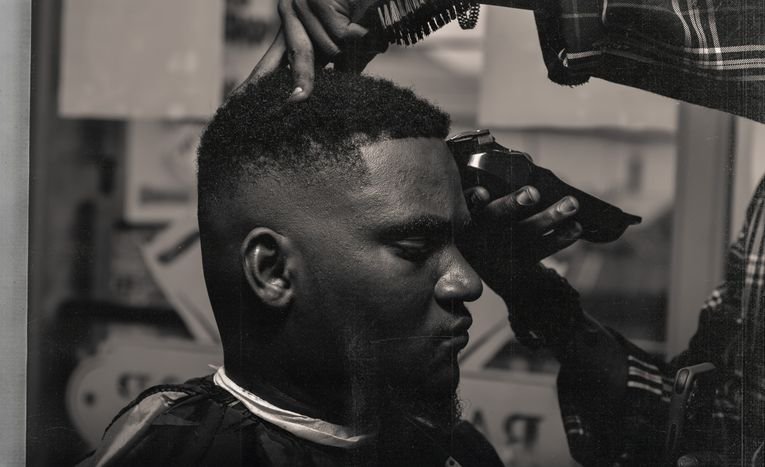
Longer hair relies on volume to look full, and thinning hair simply cannot generate that volume the way it once did, which makes sparse areas more visible under length rather than less. Shorter cuts remove this problem altogether by keeping length uniform across the head, so there is far less contrast between thinning and fuller areas for the eye to notice. This is the single biggest reason buzz cuts, crew cuts and textured crops dominate almost every recommendation for hair loss.
The combover myth
Traditional combovers, where hair is grown long on one side and swept across a thinning or bald patch, are widely considered one of the least effective options available. Rather than disguising hair loss, a combover tends to draw the eye directly to the contrast between the covered area and the surrounding thinning hair, and it is highly vulnerable to wind and movement throughout the day. A short, textured side part achieves a similar practical effect without the same risk of the style falling apart.
Should you just shave it all off?
For more advanced thinning, particularly once the crown is significantly thinner than the surrounding hair, a fully shaved head is often the cleanest and most confident-looking option. Rather than trying to work around an uneven pattern of loss, shaving removes the contrast entirely, and pairing a shaved head with a well-groomed beard is a widely recommended combination that reads as a deliberate choice rather than a concession to hair loss.
Frequently asked questions
What should I tell my barber if I have thinning hair?
Point out specifically where you are thinning, whether that is the crown, hairline or diffusely across the top, bring a reference photo if you have one, and specify a guard number for the sides so the barber can match the length to what will genuinely minimise contrast in your particular pattern.
Can styling products actually help thinning hair look fuller?
Yes, to a degree. Lightweight texturising products add separation and a sense of volume without weighing hair down, which can make diffuse thinning look less flat, though products cannot recreate the density of fuller hair.
Does a beard help balance out a receding hairline or bald crown?
Many men find that a well-groomed beard helps balance the overall look, particularly alongside a shaved or very short head, since it draws visual attention to the lower half of the face rather than the hairline.
Our recommendation
Identify your specific pattern of thinning first, then lean towards shorter, uniform-length cuts over anything that relies on volume or length to cover sparse areas. If thinning has progressed significantly, a fully shaved head paired with a well-maintained beard is consistently rated among the most flattering, lowest-maintenance options, rather than something to be avoided.