
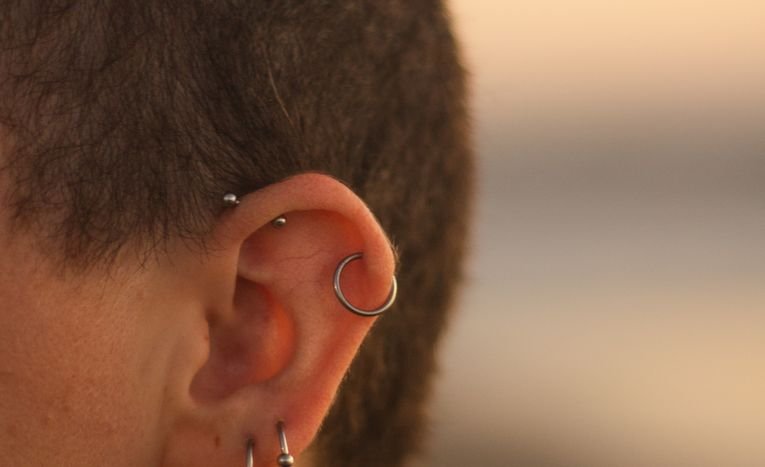
Choosing the right jewellery for a new piercing is not just a style decision. The metal, the fit and the closure you pick in the first few weeks can decide whether a piercing heals cleanly or ends up sore, swollen or rejected. This guide walks through every major ear piercing placement, the jewellery each one needs, safe materials, healing timelines and the aftercare that professional piercers actually recommend, so you can go into your appointment (or your next jewellery change) knowing exactly what to ask for.
What is piercing jewellery, and why does the placement matter?
Piercing jewellery is any stud, ring, barbell or clicker designed to sit inside a healed or healing puncture in the skin or cartilage. Unlike a standard earring, it has to do two jobs at once: look good, and stay biocompatible with living tissue that may still be repairing itself for months. The right choice depends heavily on where the piercing sits. A soft, well-supplied earlobe behaves completely differently from dense ear cartilage, which is why a flat stud that suits a lobe piercing is often the wrong shape entirely for a conch or a daith.
Ear piercing types compared: pain, healing time and jewellery
The table below brings together the placements searched for most often, so you can see at a glance how they differ before booking an appointment.
| Piercing | Location | Typical healing time | Best starter jewellery |
|---|---|---|---|
| Lobe | Soft lower ear | 6 to 8 weeks | Flat-back stud |
| Helix | Upper outer cartilage | 6 to 9 months | Flat-back stud or small hoop |
| Tragus | Small flap over the ear canal | 6 to 9 months | Flat-back stud |
| Conch | Centre of the ear (inner or outer bowl) | 6 to 12 months | Flat-back stud (inner) or hoop 10 to 14mm (outer) |
| Daith | Innermost fold above the ear canal | 6 to 12 months | Curved barbell or seamless ring |
| Rook | Anti-helix ridge above the tragus | 6 to 18 months | Curved barbell |
| Nipple and septum | Body placements, thicker tissue | 3 to 12 months | Circular barbell or captive ring, sized by a professional |
Two things worth noting from that table. First, cartilage always heals more slowly than soft tissue because it has a limited blood supply, which is exactly why cartilage placements such as the rook and daith need patience rather than a quick jewellery swap. Second, the shape of the jewellery is not optional. A daith curves through a fold of cartilage, so straight posts simply do not work there, while an outer conch has enough surface area for a proper hoop, unlike the tighter inner conch, which needs a flat-back stud.
Safe materials: what your piercer should be offering you
Material matters more than most first-time clients expect. The Association of Professional Piercers recommends three material categories for a fresh piercing: implant-grade titanium (ASTM F-136), implant-grade steel (ASTM F-138), and solid 14 karat or higher gold that is nickel and cadmium-free. Titanium is the most commonly recommended option because it is lightweight, fully biocompatible and can be anodised into different colours without affecting its safety. Niobium is a respected alternative with a very similar profile, though it lacks a formal implant-grade classification.
Gold-plated jewellery is best avoided for a new piercing. The plating is only a thin layer sitting over a cheaper base metal, and once it wears through, which happens quickly with the friction and moisture of a healing wound, the skin is left in direct contact with whatever alloy sits underneath, often one containing nickel. Sterling silver has the same problem in a different form: it can tarnish and oxidise in the warm, moist environment of a fresh piercing, so most piercers reserve it for jewellery worn once healing is complete.
Quick material comparison
| Material | Safe for new piercings? | Notes |
|---|---|---|
| Implant-grade titanium (ASTM F-136) | Yes | Lightweight, nickel-free, can be anodised for colour |
| Niobium | Yes | Similar profile to titanium, can be anodised black |
| Solid 14k+ gold, nickel-free | Yes | Must be alloyed specifically for biocompatibility |
| 316L surgical steel | Generally yes | Contains trace nickel locked in the alloy; fine for most, but not for known allergies |
| Gold-plated base metal | No | Plating wears through onto healing tissue |
| Sterling silver | Once healed only | Can tarnish in a fresh wound; fine for finished piercings |
How long does it take a piercing to heal?
Lobe piercings typically heal in six to eight weeks because they sit in soft, well-supplied tissue. Cartilage piercings such as the helix, tragus, conch and daith take much longer, usually six to twelve months, and the rook can take up to eighteen. A piercing can look settled on the surface well before the tissue underneath has fully healed, which is why piercers ask you to wait for their sign-off before changing jewellery.
Aftercare that actually protects the healing process
- Clean the area with a saline solution, not alcohol or antiseptic creams, which can dry out and irritate healing skin.
- Avoid turning or twisting new jewellery. This is an old myth that does more harm than good.
- Keep hair, phones and pillowcases away from the piercing where possible, particularly for cartilage placements.
- Do not change jewellery until your piercer confirms the piercing is fully healed, even if it looks fine on the outside.
- Space multiple cartilage piercings three to six months apart so your immune system is not managing several healing sites at once.
Building a curated ear the right way
If you are planning several piercings rather than just one, sequencing matters. A helix is usually the easiest cartilage placement to start with, since it heals reliably and gives you a realistic sense of the aftercare commitment before you try something more anatomically demanding, such as a rook or daith. An industrial counts as two simultaneous piercings connected by one barbell, so it is worth treating as an advanced step rather than a starting point.
Frequently asked questions
Can everyone get a tragus or conch piercing?
Not always. Ear anatomy varies, and some people do not have enough tissue in the tragus or anti-tragus area to support a piercing safely. A reputable piercer will check your anatomy and tell you honestly if a placement is not suitable before going ahead.
Does a daith piercing help with migraines?
This is a popular claim, but there is no scientific evidence behind it. Many people request a daith piercing hoping for migraine relief, and while the placement itself is safe when done professionally, it should not be treated as a medical treatment.
Why does my new piercing need implant-grade titanium specifically?
Implant-grade titanium is inert, meaning the body does not react to it, which lowers the risk of irritation or allergic reaction while the wound is still open. Once a piercing is fully healed, you have more flexibility with materials such as sterling silver or gold-plated pieces.
How many piercings should I get in one session?
Most professional piercers recommend no more than two or three in a single visit, since each one places a demand on your immune system as it heals. An industrial piercing already counts as two.
Our recommendation
If you are booking your first cartilage piercing, start with a helix in implant-grade titanium. It is the most forgiving cartilage placement for healing, it gives you a genuine trial run of the aftercare routine, and titanium keeps your options for anodised colour open without any of the risk that comes with plated metals. Once that piece has fully healed, and only then, is the right time to talk to your piercer about a daith, tragus or conch.
Sources: Association of Professional Piercers, safepiercing.org. This article is general guidance and does not replace advice from a licensed, professional piercer.