
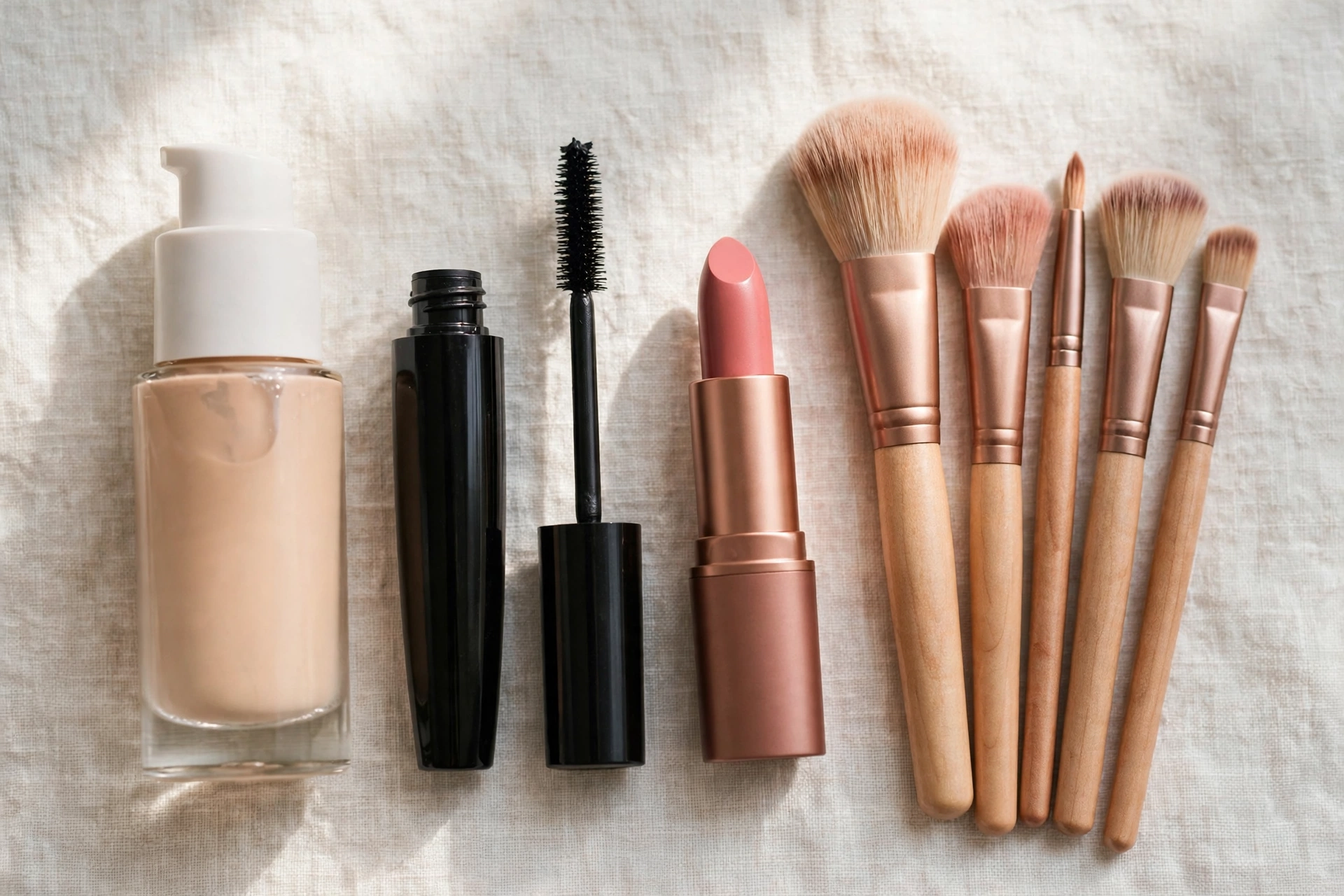
An everyday makeup routine for beginners is a short, repeatable routine that makes you look polished without taking over your morning. It covers skin prep, a light base, brows, eyes, lips and setting, and most beginners can finish it in 5 to 10 minutes.
Skin prep first
Makeup sits better on clean, moisturised skin. Dry patches show through a base, so a short prep step helps makeup look smooth and last longer.
Wash with a gentle cleanser and pat your skin dry. Apply a small amount of moisturiser and let it sink in for a minute, then finish with a light sunscreen. Primer is optional: it helps if your makeup fades quickly or your skin is very oily. If your routine already lasts well, skip it.
Base: light coverage that looks like skin
A good everyday base should look like skin, not like makeup. Choose a light, forgiving product such as a tinted moisturiser, a skin tint or a light coverage foundation. These even out skin tone while letting natural skin show through.
Pick a shade that matches your jawline in natural light. Test it on your jaw, not on your hand, because the skin on your hand is often a different shade. The right shade blends away and leaves no visible edge.
Apply a small amount first. Dot it on your forehead, cheeks, nose and chin, then blend outwards with clean fingers, a damp sponge or a brush. Add more only where you need it. If a spot still shows, tap a tiny dot of concealer over it.
Brows: the quick shape that frames the face
Brows frame the face, so a small amount of work here makes a big difference. The goal is to fill gaps and tidy the shape, not to draw a new brow.
Brush your brows upwards with a clean spoolie brush to show their natural shape and reveal sparse areas. Use a brow pencil or powder in a shade close to your natural brow colour. For most people, a shade slightly lighter than the brow hair looks softer. Use short, light strokes to fill gaps, following the direction your hairs grow, then brush through again to soften the colour.
Eyes: one simple look that works every day
One simple look works for work, errands and a normal day out. You need only a neutral shade, mascara and, if you like, a soft liner.
Sweep a neutral eyeshadow close to your skin tone across the lid with a fluffy brush. Add a slightly deeper shade into the crease for more definition, and blend well. Then apply mascara: wiggle the brush at the roots and pull it through to the tips. One or two coats give a clean, awake look. If you like eyeliner, keep it soft with a thin line close to the upper lash line.
Lips: colour that lasts without fuss
Choose a colour close to your natural lip shade, such as a soft pink, a warm nude or a gentle berry. These shades look polished and are easy to reapply without a mirror.
If your lips feel dry, start with lip balm, then blot away any excess before you apply colour. Too much balm under lipstick can make it slide off quickly. Apply lipstick from the bullet or with a brush, blot once with a tissue, then apply a second light layer. This helps the colour last longer. A lip tint or tinted balm fades evenly and is easy to top up during the day.
Setting: making it last
Setting helps your makeup stay in place through a busy day. A light setting spray is the easiest option for beginners. Hold it at arm’s length, close your eyes and mist it evenly over your face. Let it dry on its own.
If you prefer powder, use a small amount on the areas that get shiny first. Press it in gently with a brush or a puff rather than sweeping it across the whole face. Your hair can affect how your makeup holds up too, especially on warm days or when you are active. If you want ideas that keep your style tidy from morning to evening, these hairstyles that stay put are a useful starting point. Carry blotting paper for touch ups, and blot shine away before adding more powder.
The 5 minute version
Use this version on busy mornings. It covers the essentials and still looks polished.
- Moisturise and apply sunscreen.
- Apply a skin tint or tinted moisturiser and blend it well.
- Tap concealer only where you need it.
- Brush and lightly fill your brows.
- Apply one or two coats of mascara.
- Add a lip tint or a natural lipstick.
- Mist with setting spray.
The 10 minute version
Use this version when you have a little more time. It adds soft definition and a more finished look.
- Cleanse, moisturise and apply sunscreen.
- Apply primer only where your makeup fades first, if you need it.
- Apply a light base and blend it well.
- Add concealer where needed and set shiny areas with a light powder.
- Fill and brush your brows.
- Apply a neutral eyeshadow and blend it into the crease.
- Add a soft liner close to the lash line, if you like it.
- Apply mascara to the upper lashes.
- Add a touch of blush to the cheeks.
- Finish with lipstick and setting spray.
Common beginner mistakes
- Using too much base: start with a small amount and add more only where needed. A heavy base looks cakey and settles into fine lines.
- Choosing the wrong shade: test on your jawline in natural light.
- Skipping moisturiser: dry skin makes makeup look patchy. A short prep step helps everything blend better.
- Drawing brows too dark: use light strokes and a shade close to your natural brows.
- Applying too much mascara: one or two coats are enough. More coats can clump and flake during the day.
- Forgetting to blend: blend the edges of every product, especially base, blush and eyeshadow. Harsh lines make makeup look unfinished.
Frequently asked questions
What order should I apply makeup in?
Follow this order: skin prep, base, concealer, brows, eyes, blush, lips and setting. Setting goes last to hold everything in place.
Do beginners need primer?
No. Primer helps if your makeup fades quickly or your skin is very oily. If your routine already lasts well, skip it.
How do I stop makeup looking cakey?
Use less product, blend well and prep your skin first. Choose a light base, apply a thin layer and add more only where needed.
How can I make my makeup last at work?
Prep your skin, use a light base and set it with spray or powder. Avoid touching your face, and blot shine with blotting paper before you add more powder.
What should I carry for touch ups?
Carry blotting paper, your lip colour and, if you need it, a small pressed powder. These three items cover shine, colour and a quick refresh.
How often should I replace makeup products?
Replace mascara every three months, because it dries out and can carry bacteria. Replace liquid base products and concealers after about a year.
Can I wear this routine every day?
Yes. It uses light products and a short list of steps, so it suits work, study and everyday errands.
Conclusion
An everyday makeup routine for beginners does not need to be long or complicated. Clean and moisturise your skin, apply a light base, tidy your brows, add one simple eye look and a natural lip colour, then set it. Start with the 5 minute version, move to the 10 minute version when you have more time, and adjust the amounts until the routine fits your morning.