
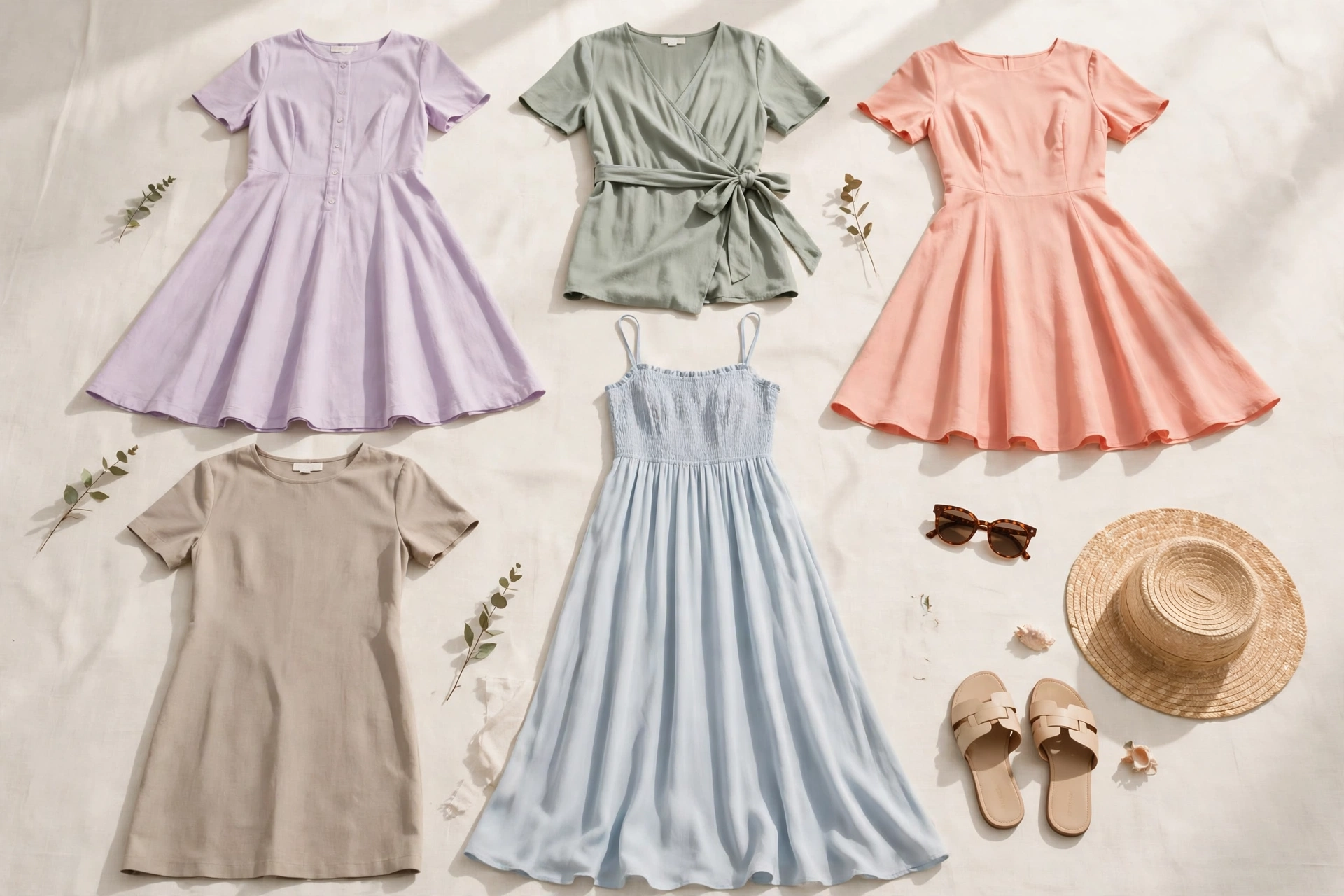
The best summer dress for your shape is the one that balances your shoulders, waist and hips. Wrap dresses suit most shapes. A-line dresses flatter pear shapes. Fit-and-flare dresses suit hourglass and rectangle shapes. Empire waist dresses suit apple shapes. This guide to summer dresses by shape explains each shape in turn, so you can choose a dress with confidence and enjoy wearing it all summer.
Summer dressing should feel easy, yet many women buy a dress they love on the hanger and feel unsure when they try it on. The cut is often the reason. This guide to summer dresses by shape covers the five main body shapes, plus petite and tall frames, the fabrics that work best in summer, and how to pick the right length. Use it as a starting point, not a set of rules.
How to Find Your Body Shape
Before you shop, take five minutes to work out your shape. Stand in front of a mirror in fitted clothes and look at three points: your shoulders, your waist and your hips. A soft tape measure helps. Measure the widest part of your shoulders, your bust, the narrowest part of your waist, and the widest part of your hips, then note which area is widest and whether your waist is clearly defined.
Most women fit into one of five broad shapes. An hourglass shape has a defined waist with bust and hips in balance. A pear shape has hips wider than shoulders. An apple shape carries more fullness around the middle with slimmer legs. A rectangle shape has shoulders, waist and hips in a fairly straight line. An inverted triangle shape has shoulders wider than hips. Many women sit between two shapes, and your shape can change over time. Use the shape that fits you best right now and treat the advice below as guidance, not law.
Two quick tests help. Wrap a belt around your natural waist. If it sits in a clear dip, your waist is defined. If it slides up or sits flat, it is less defined. Then check your shoulders. If a straight shoulder seam sits past your shoulder bone, your shoulders are narrow. If it pulls inward, they are broad.
Summer Dresses for an Hourglass Shape
An hourglass shape has a defined waist and balanced bust and hips. The aim is to show the waist without adding bulk at the bust or hips, so choose dresses that follow your shape. Dresses that hide your waist can make you look wider than you are.
Wrap dresses are a strong first choice. The tie sits at your natural waist and the V neckline lengthens the top half, and a knee length or midi wrap dress in cotton or viscose works for day trips, lunches and garden parties. Fit-and-flare dresses also suit you well, and belted shirt dresses are another good option, as the belt marks the waist.
V-neck and scoop necklines suit an hourglass shape, as they break up the chest area and keep the look balanced. A defined waistband, a tie belt or a waist seam all help. Stretch jersey works well for a closer fit.
Approach shapeless shift dresses with care, as they hide the waist and can make an hourglass figure look boxy. If you love a shift style, add a slim belt at your waist. Avoid heavy ruffles at the bust or hips, as they add volume where you do not need it.
Summer Dresses for a Pear Shape
A pear shape has hips wider than the shoulders, with a defined waist. The aim is to balance the top half with the bottom half and to skim over the hips, so choose a fuller skirt with a more detailed bodice.
A-line dresses are the classic choice for a pear shape. The skirt flares gently from the waist and skims the hips without clinging, and a knee length or midi A-line dress in light cotton or linen suits most occasions. Look for a bodice with a pattern, a bright colour or a detail such as a bow or a ruffle, as this draws the eye upward and balances the hips.
Off-shoulder and boat necklines widen the shoulder line and help to balance a pear shape. V-neck and scoop necklines also work, as they open up the chest area. A flutter sleeve adds width at the shoulders without feeling heavy.
Keep the skirt simple. Avoid clingy pencil skirts, heavy pleats at the hip and large pockets on the skirt, as these add bulk where you want a smooth line. A darker skirt with a lighter top is a useful trick, but A-line and fit-and-flare cuts already do most of the work for you.
| Body shape | Best summer dress styles | Styles to approach with care |
|---|---|---|
| Hourglass | Wrap dress, fit-and-flare, belted shirt dress | Shapeless shift dress, boxy smock dress |
| Pear | A-line dress, fit-and-flare, off-shoulder dress | Clingy pencil skirt, heavy hip details |
| Apple | Empire waist dress, A-line dress, wrap dress with ruching | Belts at the natural waist, clingy jersey |
| Rectangle | Fit-and-flare dress, belted dress, peplum dress, tiered dress | Straight shift dress worn without a belt |
| Inverted triangle | A-line dress, skater dress, full skirt dress | Puff sleeves, boat necklines, shoulder pads |
Summer Dresses for an Apple Shape
An apple shape carries more fullness around the middle, often with slimmer legs and a less defined waist. The aim is to create a long, smooth line and to show off your legs, so choose dresses that skim rather than cling.
Empire waist dresses are a strong choice. The seam sits just below the bust and the skirt falls loosely from there, which skims the tummy area and gives a long line. A-line dresses work well too, as the gentle flare gives room without adding volume at the waist.
Wrap dresses with ruching can also suit an apple shape. The ruching gathers fabric across the middle and softens the line, while the V neckline lengthens the top half. Look for a tie that sits above the natural waist rather than on it.
V-neck and scoop necklines help to lengthen the torso, as they draw the eye up and down rather than across. Show your legs with a knee length hem, which is often the most flattering length for an apple shape.
Approach belts at the natural waist with care, as they can draw attention to the middle and feel tight on a warm day. Clingy jersey and thin fabrics that stick to the body are also worth avoiding. A dress with a bit of structure holds its own shape and lets you move freely.
Summer Dresses for a Rectangle Shape
A rectangle shape has shoulders, waist and hips in a fairly straight line, with little waist definition. The aim is to create the look of curves, so choose dresses with volume at the bust or skirt and a marked waist.
Fit-and-flare dresses are a good first choice. The fitted bodice and flared skirt give the impression of a waist, even where the natural waist is straight. Belted dresses work in the same way. Peplum dresses add a flared ruffle at the waist, which creates a curve at the hip.
Tiered and ruffled dresses add volume and movement. A tiered midi dress in cotton gives shape without a belt, and ruffles at the shoulders or hem add width where you want it. A gathered or smocked bodice can create a waistline effect too.
Necklines matter. A sweetheart neckline, a V-neck or a scoop neck adds shape at the top, and a cowl neck can soften a straight torso. A light jacket or cardigan over a simple dress can add the definition the dress lacks on its own.
Approach straight shift dresses with care when worn on their own, as they follow the straight line of the body and can look shapeless. If you like a shift dress, add a belt or wear it with a light open layer.
Summer Dresses for an Inverted Triangle Shape
An inverted triangle shape has shoulders wider than the hips, often with slimmer legs. The aim is to add volume at the hips and to soften the shoulder line, so choose dresses with fuller skirts.
A-line and skater dresses are the best starting point. The full skirt balances the shoulders, and a V-neck breaks up the shoulder line and draws the eye down the centre. Halter necklines can work, but choose a soft halter rather than a stiff one.
Look for skirts with pleats, gathers or a flare, as these add volume at the hip and balance the shape. A patterned skirt with a plain top draws the eye down. Wide straps and cap sleeves are kinder than spaghetti straps.
Approach puff sleeves, boat necklines and shoulder pads with care, as they all add width at the shoulder. Heavy embellishment on the bodice has the same effect. Keep the top half simple and let the skirt do the work.
Summer Dresses for a Petite Frame
A petite frame is about height rather than shape, and it can combine with any of the five shapes above. The aim is to keep the dress in proportion to your height so it does not swamp you.
Shorter hemlines usually work best. A knee length dress shows more leg and keeps the look in scale. Midi dresses can work too, but choose one that ends at the slimmest part of your calf. Maxi dresses suit petite frames when the print is small and the waist is defined.
Small prints and vertical lines help, as they keep the eye moving up and down. A single colour from top to bottom has the same effect and can make you look taller.
Keep accessories in scale. A small bag and slim sandals suit a petite frame better than a large tote and chunky shoes. If you wear heels, a nude or skin tone shoe lengthens the leg line.
Summer Dresses for a Tall Frame
A tall frame suits long lines, and summer dresses are an easy win. Maxi dresses look natural on a tall figure, and bold prints sit well on a longer body. The main task is to check the length, as many high street dresses are cut for an average height and can end up shorter than planned.
Maxi dresses in a light cotton or viscose are a strong choice. They use the full length of the frame and feel elegant without effort. Midi dresses also work, but check where the hem falls, as a midi can end at the knee on a taller woman. For a true midi, look for tall ranges.
Belts help to break up a long torso. A wide belt or a tie waist adds shape and stops a long dress looking like one straight line. Bold prints and horizontal stripes suit a tall frame, as there is room for the pattern to breathe.
Flat sandals suit a tall frame in summer, and you do not need a heel to lengthen the leg. If you do wear heels, a block heel is more comfortable for long days. Sleeves are worth checking too, as short sleeves can sit high on a longer arm.
Summer Dress Fabrics That Flatter Every Shape
The fabric matters as much as the cut. A good shape in the wrong fabric can cling, crease or feel hot, so choose light, breathable fabrics and learn how each one behaves.
Cotton is a reliable choice. It breathes well, holds its shape and suits structured styles such as shirt dresses and A-line dresses. Linen is cooler but creases quickly, so it suits loose dresses rather than fitted styles. Viscose drapes softly and works well for wrap dresses and flowing midi dresses. Jersey is stretchy and comfortable, but choose a medium weight, as thin jersey can cling in hot weather. Seersucker holds the fabric away from the skin, which keeps you cool.
| Fabric | Feel in summer | Best dress styles | Watch out for |
|---|---|---|---|
| Cotton | Breathable and structured | Shirt dress, A-line dress | Can crease, needs ironing |
| Linen | Very cool and relaxed | Loose shift dress, smock dress | Creases fast, suits casual looks |
| Viscose | Soft drape, light feel | Wrap dress, flowing midi dress | Can shrink if washed hot |
| Jersey | Stretchy and comfortable | Fit-and-flare dress, bodycon in a heavier weight | Thin jersey can cling |
| Chambray | Light and casual | Shirt dress, button front dress | Fades with frequent washing |
| Seersucker | Cool, holds away from skin | Summer shift dress, sleeveless dress | Limited colour range |
When you try a dress on, do the movement test. Sit down, walk a few steps and raise your arms. If the fabric pulls, rides up or sticks, it will do the same all day. A lined bodice or a slip underneath can stop a light fabric from clinging.
How to Choose the Right Dress Length
Length changes the whole look of a dress. The right length depends on your height, your shape and the occasion. A short dress feels casual, while a long dress feels more formal and gives more coverage.
| Length | Best for | Good occasions |
|---|---|---|
| Mini, above the knee | Petite frames, apple shapes showing slim legs | Holidays, festivals, casual days out |
| Knee length | Most shapes, a safe everyday length | Work, lunches, day trips, shopping |
| Midi, mid calf | Hourglass, pear and rectangle shapes | Weddings, garden parties, smart days out |
| Maxi, ankle or floor length | Tall frames, inverted triangle shapes | Evening events, holidays, formal summer occasions |
UK summer weather is changeable, so think about layers when you choose a length. A midi dress works with a light cardigan or a denim jacket on a cool evening. A maxi dress can feel warm on a hot day, so choose a light fabric and a sleeveless or short sleeve cut.
Styling Tips That Work for Every Shape
A few styling habits make any summer dress look better, whatever your shape. First, get the underwear right. Smooth, well fitting underwear stops lines showing through light fabrics and helps the dress sit properly.
Second, use a belt with intent. A belt at the narrowest part of your waist adds shape to a straight dress, and a belt worn just under the bust suits empire waist styles. Third, choose shoes that match the dress length. Flat sandals suit mini and knee length dresses, block heels suit midi dresses, and wedges work well with maxi dresses.
Fourth, layer lightly. A denim jacket, a linen blazer or a light cardigan adds warmth on a cool UK evening and can change a dress from daytime to evening. Fifth, keep accessories in proportion. A small bag suits a petite frame, while a larger tote suits a taller frame.
Finally, plan your summer dresses as part of a small seasonal wardrobe rather than as single buys. Two or three dresses in different lengths and colours can cover most summer occasions, and they work harder when they share shoes and layers. Our guide to a capsule wardrobe by season shows how to build that rotation for UK weather.
Caring for Your Summer Dresses
Summer dresses need a little care to stay looking good. Wash them less often where you can, as over washing fades colours and wears fabric out. Air a dress after wearing it and spot clean small marks rather than washing the whole dress. When you do wash, follow the care label.
Light colours and white dresses need care in the wash, as they can pick up colour from other clothes. Wash whites separately and avoid hot water unless the label allows it. Linen and viscose can shrink in a hot wash, so use a cool cycle and dry them out of strong sun, which can fade bright colours.
Store summer dresses on hangers where you can, as folding can crease linen and cotton, and use padded hangers for heavier dresses to stop the shoulders stretching. If you are unsure what a symbol on the label means, our guide to washing symbols explained covers every symbol group in plain English.
Frequently Asked Questions
What is the most flattering summer dress for most body shapes?
A wrap dress is the most flattering choice across the most shapes. The tie defines the waist, the V neckline lengthens the top half, and the skirt skims the hips. It suits hourglass, pear, apple and rectangle shapes.
Which summer dress suits a pear shape best?
An A-line dress suits a pear shape best. The skirt flares gently from the waist and skims the hips without clinging, while the bodice can carry a pattern or a detail that balances the top half.
Can apple shapes wear fitted dresses?
Yes, apple shapes can wear fitted dresses, but the fit should skim rather than cling. Look for an empire waist dress, a wrap dress with ruching, or a shift dress in a structured fabric. Avoid thin clingy jersey and belts at the natural waist.
What length of summer dress suits a petite frame?
A knee length dress or a dress just above the knee usually suits a petite frame best, as it shows the leg and keeps the dress in proportion. Midi dresses can work if the hem ends at the slimmest part of the calf.
Are maxi dresses flattering for short women?
Maxi dresses can flatter a short woman if the print is small, the waist is defined and the fabric is light. A single colour or a small print keeps the look in scale. Avoid large bold prints and heavy fabrics, which can overwhelm a petite frame.
How do I stop a summer dress clinging in hot weather?
Choose a fabric with structure, such as cotton, linen or seersucker, rather than thin jersey. A lined bodice or a slip underneath stops light fabric sticking to the skin.
Choosing summer dresses by shape is simpler than it looks. Find your shape, pick a cut that balances it, and choose a fabric that suits the weather. Try the dress on, move in it, and check it in daylight before you buy. The right dress is the one you feel good in and reach for again all summer.