
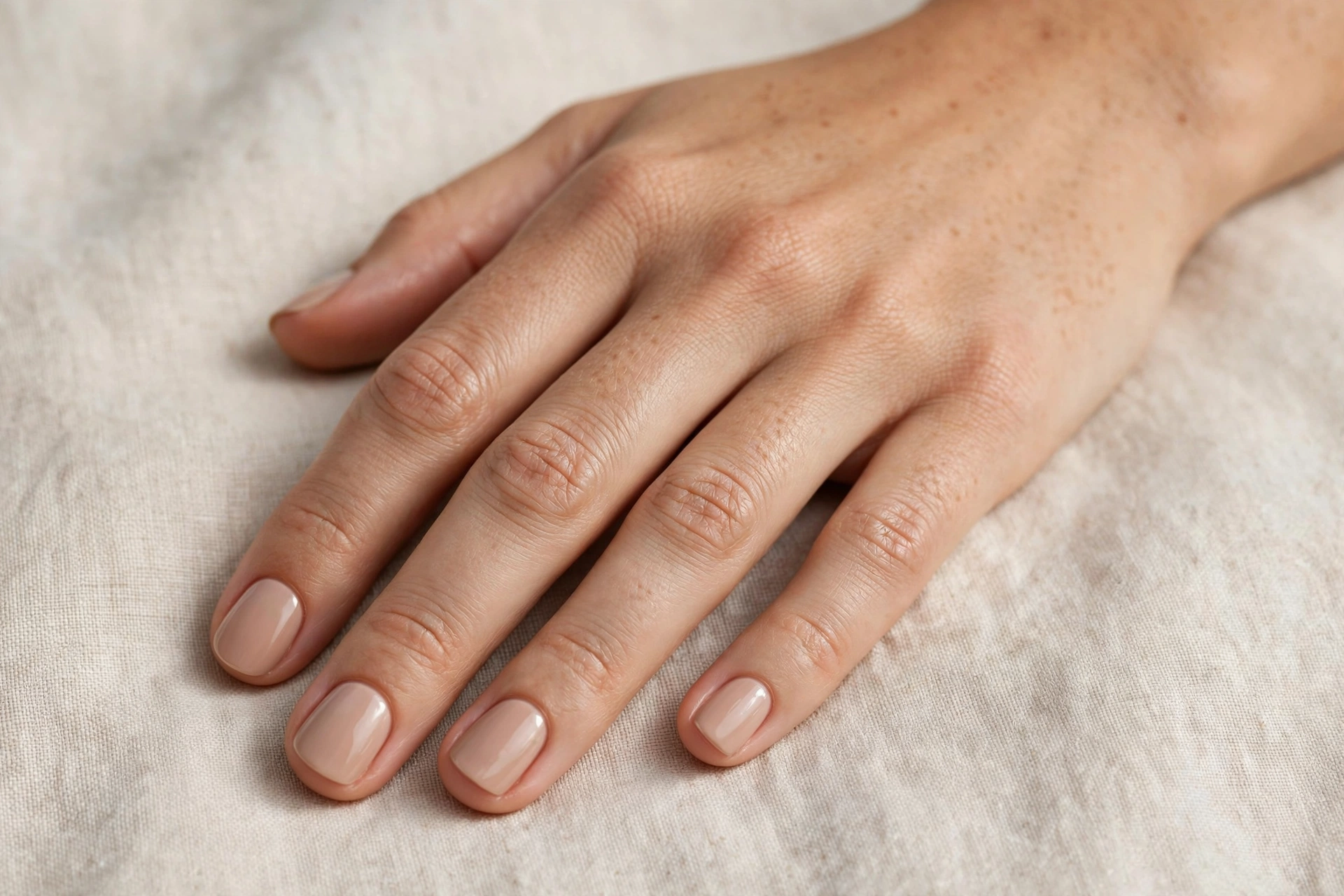
Short nails can look neat, elegant and intentional with the right shape. The wrong shape can make short nails look stubby, wide or prone to breaking. This guide compares the main shapes for short nails, explains which shape suits which nail bed and finger, and gives filing steps you can follow at home or ask for at the salon.
Short answer: round and squoval are the safest shapes for short nails. Round softens wide nail beds and short fingers. Squoval adds a neat, modern edge while keeping the corners strong. Oval works if your nails are slightly longer. Almond and square need more length to look balanced, and square corners break most easily on short nails.
Shapes at a Glance for Short Nails
Round follows the natural curve of the fingertip. It is the most forgiving shape, because it mirrors the nail bed and needs little length. Squoval is square with softened corners. It looks tidy and modern, and it keeps more of the side wall than a full square, which helps strength. Oval is a longer, softer version of round, with sides that taper gently. It lengthens the look of the finger, but it needs a little extra free edge to work.
Almond tapers to a soft point. It looks elegant, but on very short nails it can look cramped, and the point is vulnerable to breakage. Square has straight sides and a flat tip. It suits long, narrow nail beds, but on short nails it can emphasise width and the corners chip easily. Stiletto and coffin shapes need length and are not practical choices for short nails.
Best Shape by Nail Bed: Short, Wide and Narrow
For a short nail bed, round is usually the best choice. It needs the least length, it follows the fingertip, and it makes the nail look cared for rather than bitten or broken. Squoval is a good second choice if you want a flatter tip and a more polished look.
For a wide nail bed, round softens the width and draws the eye along the finger rather than across the nail. Avoid full square on wide beds, because straight sides and a flat tip make width more obvious. Oval can also help wide beds, but only if you have enough length for the taper to show.
For a narrow nail bed, squoval and oval both work well. Narrow beds can carry a flatter tip without looking wide, so squoval gives a neat, salon finished look. Round still works, but it may look less defined on a very narrow nail. Choose by how much length you have, not by trend alone.
Best Shape by Finger and Hand
Short fingers benefit most from round and oval shapes, because curved tips extend the visual line of the finger. Long fingers can carry squoval well, because the flat tip balances the length. If your hands are small, keep the shape simple. A clean round or squoval shape looks intentional, while a dramatic shape on very short nails can look out of proportion.
Consider your lifestyle finger by finger if needed. Your dominant hand may break more often, so a stronger shape such as round or squoval makes sense there. Your other hand can carry a slightly longer oval if you prefer variety. Matching all ten nails is the norm, but strength should win over symmetry when breakage is a recurring problem.
Strength by Shape: Which Shapes Break Least
Round is the strongest shape for short nails, because there are no corners to catch and the stress spreads evenly across the tip. Squoval is next, because its corners are softened and the side walls stay mostly straight. Oval is slightly weaker than round, because the tapered sides thin the tip.
Square is the weakest shape for short nails. The corners catch on fabric, keyboards and pockets, and they chip or peel first. Almond sits between oval and square for strength, but its point is a weak spot. If your nails split, peel or break often, start with round, grow a little length, and only then try squoval or oval. Our guide to how to repair damaged nails after acrylics covers recovery steps that also help weak short nails regain strength before you change shape.
Filing Steps for Round, Oval and Squoval
File on dry nails with a fine grit file, and file in one direction rather than sawing back and forth. Sawing frays the free edge and causes peeling. Start by shaping the sides, then the tip, then soften any rough edges with a light pass.
For round: follow the curve of your fingertip, keeping the sides slightly tapered and the tip evenly curved. Check the shape from the palm side, not just the top, so both sides match. For squoval: file the sides straight, file the tip flat, then round each corner just enough to remove the sharp point. The corners should look soft, not fully round.
For oval: file the sides at a gentle angle towards the centre, then round the tip into a soft egg shape. Keep the taper even on both sides, and stop before the tip becomes pointed. After filing, smooth the edge with a buffer block and apply cuticle oil. Oil keeps the free edge flexible and reduces splitting between filings.
Shape Choice With Damaged or Very Short Nails
If your nails are damaged, peeling or bitten, choose round and keep the length short until the nail bed recovers. A short round shape protects the free edge while new, stronger nail grows out. Avoid extensions and dramatic shapes during recovery, because they add stress to an already weak nail.
Once the nails feel stronger and the free edge grows past the fingertip, try squoval. It gives a more finished look without demanding much extra length. If peeling returns, go back to round and check your filing method and your polish removal routine. Peeling often has a cause beyond shape, and our guide to why gel polish peels off explains pattern based causes and fixes that also apply to natural short nails under polish.
Colour and Nail Art That Flatter Short Nails
Colour can change how a shape reads. Nude shades close to your skin tone lengthen short nails. Deep shades such as burgundy and navy look chic on short round and squoval nails, because the shape stays neat. French tips work best on squoval and oval, where the flat or gently curved tip gives the white tip room to show.
For nail art on short nails, keep it simple. A single accent nail, a thin vertical line, or a small dot near the cuticle adds interest without crowding the nail. Large patterns and heavy gems overwhelm short nails and add weight that can lift polish. Negative space designs, where part of the natural nail shows, also help short nails look longer.
What to Ask For at the Salon vs DIY
At the salon, say the shape name, the length you want, and the strength concern. For example: squoval, short, with softened corners because my nails break easily. Ask the technician to file in one direction and to show you the shape from the palm side before polish. If you want to grow length, say so, so the shape is chosen to protect the nails while they grow.
At home, file little and often rather than reshaping all at once. Reshape every week or two, and tidy the edge between filings with a fine file. Keep a cuticle oil by your desk or bedside, and use it daily. Small, regular care does more for short nails than an occasional dramatic reshape.
Frequently Asked Questions
What is the best nail shape for short stubby nails?
Round is usually best. It follows the fingertip, needs the least length, and softens a short, wide nail bed better than square or almond.
Does squoval suit short nails?
Yes, if the corners are well softened. Squoval looks neat and modern on short nails and it is stronger than full square, because the corners do not catch as easily.
Can short nails wear almond shape?
Almond needs some length to look balanced. On very short nails it can look cramped and the point breaks easily. Grow a little length first, then try a soft almond.
Which nail shape lasts longest on short nails?
Round lasts longest, followed by squoval. Both avoid sharp corners, which are the first places to chip on short nails.
Should I file short nails wet or dry?
File dry nails with a fine grit file in one direction. Wet nails are softer and more likely to tear and peel during filing.
Conclusion
For most short nails, round is the safest and most flattering choice, and squoval is the best modern alternative. Match the shape to your nail bed and finger, file in one direction, and let strength guide you while nails grow. With the right shape and regular care, short nails look polished, intentional and easy to maintain.