
Building a professional make-up kit for the first time is easy to get wrong in two directions: buying too much too soon, or arriving at a paid booking without something you genuinely need. A functional starter kit that covers real client work can be built without overspending, provided you prioritise the categories that actually determine whether a look lasts and photographs well. This guide breaks down what to buy first, what can wait, and why hygiene sits at the centre of everything a working make-up artist does.
Hygiene first, always
Before any product goes near a client’s face, disinfecting brushes and tools between bookings is non-negotiable, both for the client’s safety and for your professional reputation. Applying mascara straight from the tube onto a client, rather than using a clean, disposable wand, is one of the fastest ways to lose a client’s trust and, more importantly, risks spreading infection between bookings. Separate your synthetic brushes from natural-hair ones, since they need different cleaning products, and always use a metal spatula to decant product from jars and palettes rather than dipping fingers or brushes directly in.
Building the kit by category
| Category | Core items | Why it matters |
|---|---|---|
| Skin prep | Micellar water, cleanser, hydrating cream, primer | Clean, prepped skin is the foundation every other product relies on |
| Base | A warm and a cool neutral foundation range, colour-correcting primers | Covers the widest range of clients without needing dozens of individual shades |
| Setting | Translucent loose powder, skin-toned pressed powder, long-wear setting spray | Determines whether a look lasts six hours or sixteen |
| Eyes | A warm neutral palette, a cool neutral palette, gel and pencil liners | Neutral palettes alone cover the majority of client requests |
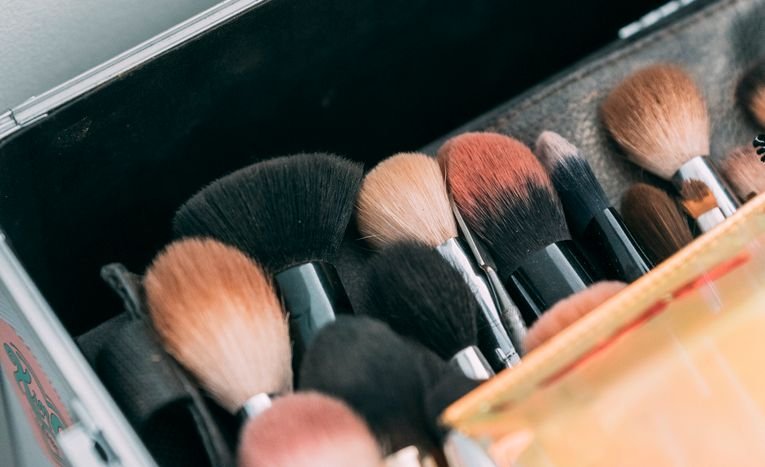
| Brushes and applicators | A core professional brush set, disposable mascara wands, sponge applicators | Cheap brushes are hard to sanitise properly and perform poorly |
How much does a beginner make-up artist kit cost?
A functional starter kit that covers essential categories, brushes, a foundational shade range, one or two reliable palettes, skin prep and a solid case, typically costs between £320 and £560 with strategic buying. This is not the kit you will have in five years, but it is enough to take on real client bookings while you build experience and reinvest earnings into expanding your range over time.
Where to spend, and where to save
Brushes are the one category worth investing in properly from day one, since poor-quality brushes are hard to sanitise thoroughly and apply product unevenly, which affects every single look you create with them. Lipsticks, individual eyeshadows and some setting sprays are easier to save on early, since they can be replaced or upgraded individually as your client base and specialism become clearer, without needing to rebuild the whole kit at once.
Specialising changes what you need
A bridal make-up artist needs strong skin prep products, a wide range of neutral shades and reliably waterproof mascara, since bridal work has to withstand tears, long hours and close-up photography. A film or television make-up artist, by contrast, needs camera-friendly products formulated to hold up under harsh studio lighting and repeated touch-ups. Deciding on a rough direction early helps focus your early purchases, even though most artists’ kits evolve considerably over their first few years.
Frequently asked questions
Do I need professional qualifications to build a make-up kit and take clients?
There is no legal requirement for a make-up-only qualification in the UK, though formal training improves technique and credibility, and insurance providers may ask about training when quoting for public liability cover, which most working make-up artists carry.
How many foundation shades do I really need to start?
A well-chosen warm-toned range and a cool-toned range, roughly eight to twelve shades total, covers a genuinely wide client base without the cost of stocking dozens of individual shades from day one.
Is it worth buying disposable brushes for hygiene?
For mascara and lip products specifically, yes. Disposable wands and applicators remove any risk of cross-contamination between clients, and most professional make-up artists treat this as standard practice rather than an optional extra.
Our recommendation
Start with hygiene supplies, a solid neutral base and setting range, and a properly built brush set, since these categories affect every single booking regardless of the specific look requested. Resist the urge to buy every trending palette in your first month, and instead let your early client work tell you where your kit genuinely needs expanding.