
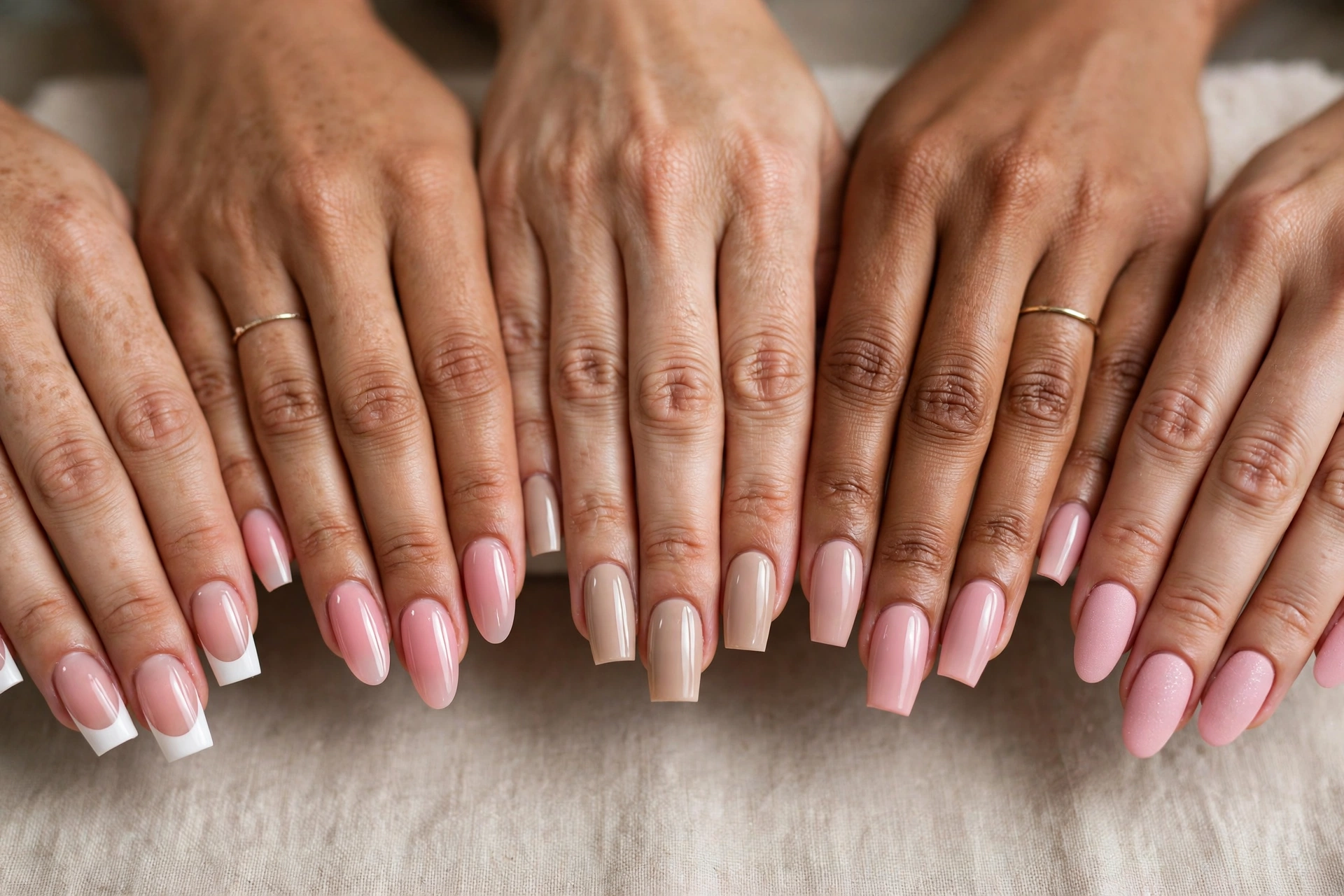
Choosing a nail extension system is confusing because salons use different names for similar results, and social media shows only the finished look. The real differences are strength, flexibility, how the extension comes off, and how much risk it carries for your natural nails. This guide compares the five main systems side by side, so you can choose by your nail type and your lifestyle, not by a photo.
Short answer: BIAB suits weak or growing nails that need strength without length. Gel-X suits people who want length with a lighter feel and a gentler removal. Acrylic suits long, sculpted shapes and heavy use. Polygel sits between acrylic and gel for strength and control. Dip powder suits short, natural length nails with colour, but it is not the best choice for long extensions. If your nails are damaged, repair comes before any extension. See our guide to how to repair damaged nails after acrylics first.
What Each System Is, in Plain English
Acrylic is a liquid and powder system. The technician mixes a liquid monomer with a powder polymer to form a bead, shapes it on a form or tip, and lets it harden in air. It is the oldest extension system and the strongest for sculpted length. It has a noticeable smell during application and needs filing to shape.
Gel-X is a soft gel full cover tip system. A pre shaped soft gel tip is glued to the natural nail with gel and cured under a lamp. The tip becomes the extension, and gel polish goes on top. It feels lighter than acrylic and soaks off more easily, because the whole tip is soft gel.
BIAB, which stands for builder in a bottle, is a thick builder gel brushed on like polish and cured under a lamp. It adds strength over the natural nail, and it can add a small amount of length with a form, but it is mainly a strengthening overlay, not a long extension system. It is popular for growing out natural nails.
Polygel is a hybrid of acrylic and gel. It comes as a thick gel in a tube, is shaped with a slip solution, and cured under a lamp. It is lighter than acrylic, stronger than regular gel polish, and easier to control during application because it does not run or set until it is cured.
Dip powder is a coloured powder system. The nail is coated with a base liquid, dipped in powder, and sealed with an activator and top coat. No lamp is needed. It gives a hard, coloured coating over the natural nail or over a tip, but building long extensions with dip alone is less reliable than with acrylic or gel systems.
Strength, Flexibility and Length Compared
| System | Strength | Flexibility | Best length | Feel |
|---|---|---|---|---|
| Acrylic | Very high | Low, rigid | Short to very long | Heavier, solid |
| Gel-X | High | Medium | Short to long | Light, natural |
| BIAB | Medium to high | Medium, some give | Natural to short extension | Light, close to natural nail |
| Polygel | High | Medium | Short to long | Lighter than acrylic |
| Dip powder | Medium to high | Low to medium | Natural to short | Thicker than polish |
Rigid systems resist bending, which helps long nails keep their shape, but a rigid nail can snap under a hard knock. Flexible systems give slightly under pressure, which can prevent a break, but they may bend out of shape if they are very long. Match the system to the length you want. Long nails need strength. Short nails can use a lighter system.
Removal and Damage Risk: The Part That Matters Most
Damage rarely comes from the product itself. It comes from removal. Picking, peeling or forcing off an extension tears layers from the natural nail, and that damage takes weeks to grow out. Safe removal is soaking or careful salon removal, never peeling.
Gel-X and BIAB soak off most easily, because they are soft gel systems. Acrylic also soaks off, but it takes longer, and the process needs patience. Polygel soaks off too, though it can take longer than soft gel. Dip powder soaks off, but removal can dry the nail and surrounding skin if it is rushed or repeated often.
If your nails peel, split or feel thin after extensions, the cause is usually removal or over filing during preparation, not the system name. Tell your technician about past damage, and ask how they prepare the nail surface. Heavy buffing thins the nail before the extension even goes on. For the warning signs that mean a break from extensions, see our guide to why gel polish peels off, which covers preparation and curing problems that also affect extensions.
DIY vs Salon: What Is Realistic at Home
BIAB and dip powder are the most realistic home systems for a careful beginner, because the application is brush based and the products are widely available. Even so, home use needs a proper lamp for BIAB, good ventilation, and strict care to avoid skin contact with uncured gel, which can cause allergic reactions over time.
Acrylic is the hardest system to learn at home. The liquid to powder ratio, the working time, and the shaping all need practice, and the fumes need ventilation. Gel-X is easier to apply than acrylic, but fitting the right tip size for each nail takes care, and a poor fit lifts early. Polygel sits in the middle. It is forgiving to shape, but it still needs a lamp, forms or tips, and filing skill.
For a first set, a salon visit is usually better value than a home kit, because the technician can assess your nail type, fit the system properly, and show you how removal should work. If you do try a home system, start with short length, follow the product instructions exactly, and never peel a set off to save time.
Cost Over a Year: What Each System Really Costs
Salon prices vary by city and by length, but the pattern is consistent. BIAB infills are usually the cheapest ongoing cost, because the service is quicker and the product use is lower. Gel-X full sets cost more than BIAB, and infills are often a full replacement rather than a fill, because the tips are replaced. Acrylic sets and infills sit in the middle to upper range, depending on length and design. Polygel is priced similarly to acrylic. Dip powder is usually priced like a premium manicure, cheaper than a full extension set, because it adds less length.
Count the full year, not the first set. A cheaper first set with frequent lifting costs more in repairs and in nail damage than a slightly dearer set that lasts three weeks. Ask the salon how long a set should last, what an infill costs, and what removal costs. Some salons charge separately for removal, and that charge matters if you change systems often.
Decision Table: Choose by Your Nails and Your Lifestyle
| Your situation | Best choice | Why |
|---|---|---|
| Weak, splitting or growing out nails | BIAB | Strength without length, gentle soak off |
| You want length but hate heavy nails | Gel-X | Light feel, clean shape, easier removal |
| You want very long or sculpted nails | Acrylic | Strongest for length and shape |
| You use your hands hard every day | Acrylic or polygel | Strength under impact, shape holds |
| You want colour that lasts on short nails | Dip powder or BIAB | Hard wearing colour, no long extension needed |
| You change your nails often | Gel-X or BIAB | Faster, gentler removal between sets |
| Your nails are short and you want flattering shape | BIAB or Gel-X short | Shape without excess length, see also our guide to the best nail shape for short nails |
What to Ask Your Technician Before You Book
Ask which system they recommend for your nail type, and why. A good technician will look at your nails, ask about your work and hobbies, and explain the trade offs, rather than selling the most expensive set. Ask how long the set should last, how infills work, and how removal is done. Ask what happens if a nail lifts or breaks between appointments, and whether a repair is included.
Mention allergies, skin sensitivity, and any past reaction to gel products. Gel allergies develop from repeated skin contact with uncured product, and they can end gel use permanently. A careful technician keeps product off the skin and cures fully. If a salon rushes curing or floods the cuticle area, say so, because that affects both wear and safety.
Frequently Asked Questions About Nail Extensions
Are nail extensions bad for your natural nails?
Extensions are not automatically damaging. Damage usually comes from over filing, poor preparation, or forced removal. A well applied set with safe removal leaves nails in good condition. Repeated peeling causes the most harm.
Which system lasts longest?
Acrylic usually lasts longest for long nails, because it is the most rigid. For short to medium length, Gel-X, BIAB and polygel can all last two to three weeks with good preparation. Dip powder lasts well on short nails but lifts sooner if the nails are long or flex a lot.
Can I switch systems between appointments?
Yes, but allow time for safe removal of the old set first. Switching without proper removal damages the nail surface. Tell the salon you plan to switch, so they book enough time.
Is BIAB the same as gel polish?
No. BIAB is a thicker builder gel that adds strength and structure. Gel polish is a thinner colour coating. BIAB can sit under gel polish colour, and it helps weak nails grow, while gel polish alone adds little strength.
Do I need a break between sets?
Not automatically. If your nails are healthy and removal is gentle, you can move from set to set. Take a break if nails feel thin, sore, peeling or sensitive, or if lifting keeps happening. Use the break to follow a repair routine, not just to wait.
Conclusion
There is no single best nail extension system, only a best match for your nails and your life. BIAB grows and protects. Gel-X gives light length. Acrylic gives maximum strength and shape. Polygel balances strength and ease. Dip powder gives durable colour at short length. Choose by nail health first, length second, and removal third, and your extensions will look better and last longer.