
Women’s Thinning Hair Hairstyles That Add Volume: Cuts and Styling That Work
The best hairstyles for thinning hair add lift at the roots, keep the ends looking full, and hold their shape through the day. A layered cut at the right length, a parting that lifts the roots, and light styling usually work better than heavy products or very long, one length hair.
How to tell if volume is a cut problem, a styling problem, or both
Look at your hair when it is clean and fully dry, with no product in it. Then ask three simple questions. First, does it fall flat at the roots even when freshly washed? If yes, the cut may not give enough lift. Heavy, one length hair can pull the roots down.
Second, does it look full after styling but flat within an hour? If yes, styling is more likely the problem. The drying method, the product amount, or the parting may not support volume. Third, do the ends look thin and wispy while the top looks fine? If yes, length is the issue. A shorter cut with a blunt edge often looks fuller.
Most people have a mix of both. A good cut creates the shape, and good styling keeps that shape alive. Try a new parting and a root lift drying method for a week. If volume improves a lot, styling was a big part of the problem. If little changes, talk to your stylist about the cut. For a starting point on matching a cut to texture, see this guide to hairstyles by hair type.
Cuts that add volume
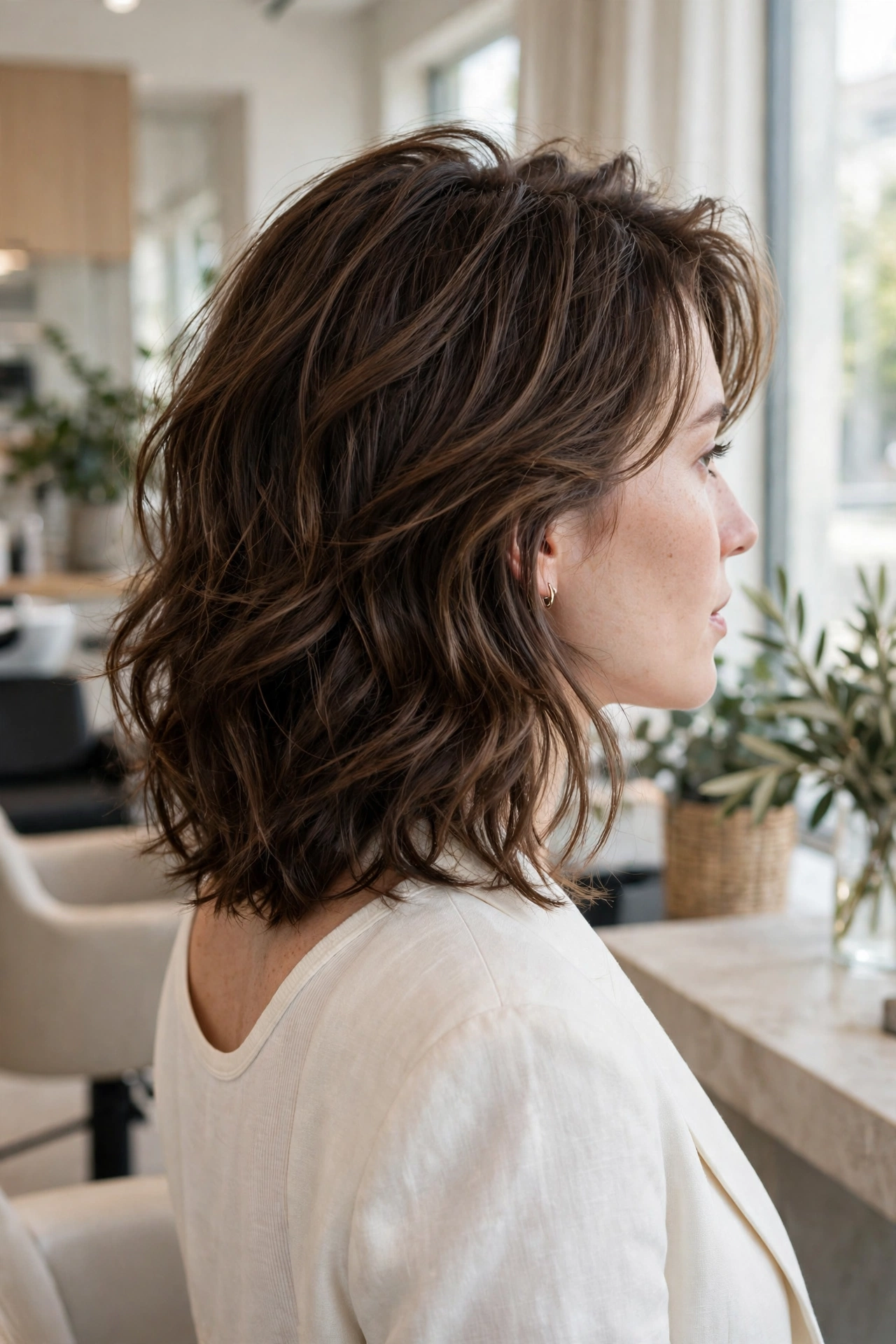
Layers are the main tool for volume. Short layers near the crown lift the top section. Longer layers through the mid lengths add movement without removing too much weight from the ends. The balance matters. Too many short layers can make ends look thin. Too few can leave hair flat and heavy.
For many women with thinning hair, a cut between chin length and shoulder length works well. It is short enough to hold lift at the roots, and long enough to allow layers, a fringe, and different partings. A blunt bob with soft internal layers is a strong choice. The blunt edge keeps the ends looking thick, while the layers inside add lift.
A layered lob, which is a long bob, suits women who want more length. Ask for layers that start around the cheekbones or jaw. This keeps movement through the hair while the ends still look full. A pixie cut with texture on top can also add a lot of volume, if the top is left long enough to style with lift at the front.
A soft, side swept fringe adds fullness across the forehead. A wispy fringe can work if it is not cut too thin. A full, heavy fringe may suit thick hair, but on thinning hair it can use up hair that would give better volume elsewhere. A curtain fringe is another useful option. It opens in the middle and blends into face framing layers.
Ask your stylist how the layers will grow out, and book regular trims to remove split, wispy ends.
Colour and parting tricks that create the look of fullness
Colour can change how full hair looks. The aim is depth, not a single flat shade. Subtle highlights around the face and through the top layers can make hair look thicker. Low lights, which are slightly darker strands, add shadow and depth underneath. Together, they stop hair from looking flat in bright light.
Keep the change soft. Harsh contrast can draw attention to the scalp in thin areas. A blended result usually looks fuller. If you colour at home, choose a shade close to your natural colour.
Parting is a free and fast trick. A centre part can flatten the roots, while a side part often lifts them. Try flipping your part after drying. A zigzag part can also help, as it hides a straight line at the scalp.
Styling step by step for volume that lasts the day
Volume starts with how you dry your hair. Follow these steps for a simple routine.
- Wash with a light shampoo. Use a small amount of conditioner on the mid lengths and ends only, not on the roots.
- Towel dry gently. Press out water with a soft towel. Do not rub hard.
- Apply a small amount of root lift spray or volumising mousse to damp roots. Start with less than you think you need.
- Dry with your head tilted slightly forward or to the side. Lift sections at the roots with your fingers or a round brush.
- When hair is about 80 percent dry, switch to your usual parting. Dry the top section last, lifting at the roots.
- Let hair cool for a minute before you touch it. Cool hair holds its shape better.
- Finish with a light mist of flexible hold spray. Avoid heavy sprays that pull hair down.
For extra lift, try rollers or clips at the crown while you get ready. Leave two or three large rollers in for ten to fifteen minutes, then shake the roots gently. In the morning, flip your part and add a little dry shampoo at the roots if needed.
Products and tools by hair type
Fine hair needs light products. Choose a volumising shampoo, a light mousse, and a root lift spray. Avoid heavy oils, thick creams, and rich masks at the roots. A small round brush and a hairdryer with a nozzle help you direct air at the roots.
Thick hair that is thinning needs control as well as lift. A light styling cream can smooth frizz without flattening the top. Layers remove bulk from the mid lengths while keeping lift at the crown. A medium round brush works well, and a wide tooth comb helps you detangle without pulling.
Wavy hair needs definition that does not crush volume. Apply mousse or a light curl cream to damp hair, then scrunch gently. Diffuse on a low heat setting, or let hair dry naturally with clips at the roots. Avoid brushing dry wavy hair, as this can turn waves into frizz.
Curly hair gets volume from shape, not just root lift. A layered cut that follows the curl pattern prevents a heavy shape. Use a curl cream or gel on damp hair, then diffuse or air dry. Once dry, lift the roots gently with your fingers. Do not comb through dry curls if you want to keep volume.
What to ask your stylist or barber
Take these questions to the salon, plus a photo of a style you like. A photo helps your stylist see the length, layers, and finish you want.
- Which length will give my hair the most fullness?
- Where should the layers sit for lift at the crown and fullness at the ends?
- Would a fringe suit my face shape and hair texture, and how much upkeep will it need?
- How should I part my hair for the most lift?
- What drying method and products do you recommend for my hair type?
- How often should I come back for a trim, and what will this cut look like as it grows out?
Also tell your stylist about your daily routine, so the cut suits a routine you can keep up.
Mistakes that flatten thinning hair
Using too much product is the most common mistake. Heavy serums, oils, and creams at the roots coat the hair and pull it down. Keep rich products on the ends only. Skipping the root drying step is another mistake. If you let hair air dry flat against the head, it sets in that flat shape.
Keeping hair too long without layers or trims also flattens it. Brushing dry wavy or curly hair too often breaks up its natural shape. Use fingers or a wide tooth comb instead.
Finally, avoid a very tight hairstyle every day. Tight ponytails and buns pull hair flat at the roots. Choose looser styles, vary your parting, and give your hair a break from tight styles when you can.
When to seek advice
Styling and cuts can improve the look of thinning hair, but they do not address every concern. If you notice a sudden change, patchy loss, a sore or irritated scalp, or hair loss that worries you, speak to your GP or ask for a referral to a trichologist or dermatologist. This guide does not diagnose causes of hair loss and does not recommend treatments. A salon can help with cut and styling. A medical professional is the right person for health questions about hair loss.
Seek advice sooner if thinning is getting worse quickly. Note when you first noticed the change. In the meantime, use gentle styling habits and avoid harsh pulling and heavy product build up.
Comparison: cuts and techniques at a glance
| Cut or technique | Volume effect | Upkeep |
|---|---|---|
| Blunt bob with soft layers | Full ends, lift at crown | Trim every 6 weeks |
| Layered lob | Movement, fuller top | Trim every 6 to 8 weeks |
| Textured pixie | Strong lift on top | Trim every 4 to 5 weeks |
| Side swept fringe | Fullness at forehead | Trim often, easy styling |
| Side part, root lift drying | Instant lift, no cut | Daily, a few minutes |
| Soft highlights, low lights | Depth, thicker look | Refresh every 8 to 12 weeks |
FAQs
What is the best length for thinning hair?
Chin length to shoulder length often works best, holding lift at the roots and fullness at the ends.
Do layers help or harm thinning hair?
Well placed layers help. They add lift and movement. Very short, choppy layers can thin the ends, so ask for layers that protect fullness.
Should I have a fringe if my hair is thinning?
A soft side swept fringe or a curtain fringe can work well. A very thick, blunt fringe may not suit very thin hair.
How can I get volume that lasts all day?
Dry the roots with lift, let hair cool before styling, and use light products. A side part or rollers at the crown can add extra hold.
Is it better to wash hair daily for volume?
Freshly washed hair often has more lift, but daily washing does not suit everyone. Use a small amount of dry shampoo at the roots between washes.
When should I see a professional about thinning hair?
See your GP, or ask for a referral to a trichologist or dermatologist, if you notice sudden change, patchy loss, scalp pain, or loss that worries you.
Conclusion
Choose a length that holds lift, add layers in the right places, and style the roots with a light touch. Use parting and colour to add depth, and keep trims regular. With the right cut and a short daily routine, thinning hair can look fuller all day.